
Save " How to Maximize Pirsumei Nissa During Megilla Reading "
How to Maximize Pirsumei Nissa During Megilla Reading
Let's begin with where one should go to hear the Megilla.

As we will see, the environment surrounding a person for the krias Megilla is of major importance in maximizing the pirsumei nissa of the krias megilla.
Shulchan Aruch says:

(ב) מבטלים תלמוד תורה לשמוע מקרא מגילה קל וחומר לשאר מצות של תורה שכלם נדחים מפני מקרא מגילה שאין לך דבר שנדחה מקרא מגילה מפניו חוץ ממת מצוה שאין לו קוברין [כדי צרכו] שהפוגע בו קוברו תחלה ואח"כ קורא:

2. We cancel Torah learning to hear the megillah, all the more so for the rest of the mitzvot of the Torah, because all of them are pushed aside before the reading of the megillah. And there isn't anything that pushes aside megillah from before it, except for an unclaimed dead body that does not have anyone to bury it (according to its need), because the one who happens upon it - he buries it first and afterwards reads [the megillah].

The source of Shulchan Aruch stems from a Rambam:

(א) וַאֲפִלּוּ כֹּהֲנִים בַּעֲבוֹדָתָן מְבַטְּלִין עֲבוֹדָתָן וּבָאִין לִשְׁמֹעַ מִקְרָא מְגִלָּה.

וְכֵן מְבַטְּלִים תַּלְמוּד תּוֹרָה לִשְׁמֹעַ מִקְרָא מְגִלָּהקַל וָחֹמֶר לִשְׁאָר מִצְוֹת שֶׁל תּוֹרָה שֶׁכֻּלָּן נִדְחִין מִפְּנֵי מִקְרָא מְגִלָּה. וְאֵין לְךָ דָּבָר שֶׁנִּדְחֶה מִקְרָא מְגִלָּה מִפָּנָיו חוּץ מִמֵּת מִצְוָה שֶׁאֵין לוֹ קוֹבְרִין שֶׁהַפּוֹגֵעַ בּוֹ קוֹבְרוֹ תְּחִלָּה וְאַחַר כָּךְ קוֹרֵא:

(1) Even the priests should neglect their service in the Temple and come to hear the reading of the Megillah.
Similarly, Torah study should be neglected to hear the reading of the Megillah. Surely, this applies to the other mitzvot of the Torah: the observance of all of them is superseded by the reading of the Megillah. There is nothing that takes priority over the reading of the Megillah except the burial of a meit mitzvah - a corpse that has no one to take care of it. A person who encounters such a corpse should bury it and then read the Megillah.

The question can be asked, what is the novelty that one can disrupt learning to read the Megilla? We know that any mitzvah that can't be performed by a messenger, one needs to do it himself, even at the expense of learning (since learning is meant to lead to performance of the mitzvos), so what is the novelty here that one needs to disrupt Torah learning for Megilla reading?
Pri Megadim says, the novelty is that hearing the Megilla is itself a fulfillment of Torah learning, but most likely it is a less difficult subject matter than one may have been learning prior to it, which would result in a "bittul Torah" in quality.
One would think that he should not sacrifice that higher quality of immersion in Torah for just hearing the Megilla, therefore the Shulchan Aruch says that nevertheless he is still required to read the Megilla.
Ohr Zarua HaGadol answers differently. He posits the novelty is, that even if one can fulfill the reading in the Beis Medrash where ones group already is learning - with a minyan - still there is a mitzvah to interupt the learning to go to a shul where there will be a larger crowd to have the advantage of Berov Am Hadras Melech.
Is the Ohr Zarua also intimating that there is a din specifically to go to hear the Megilla? In other words, is krias Megilla similar to tefilla in the aspect that there is schar pesios and that one should make an effort to go to a further shul?
We've explained the novelty of Shulchan Aruch in regards to unerupting Torah study for Megilla reading.
But the kal v'chomer of the Shulchan Aruch to other mitzvos is very difficult to understand.
We know there is a concept of osek bemitzvah patur min hamitzvah, which dictates that if one is busy doing one mitzvah and another mitzvah comes up, he does not need to interrupt the first mitzvah to do the second one.

מְנָא הָנֵי מִילֵּי? תָּנוּ רַבָּנַן: ״בְּשִׁבְתְּךָ בְּבֵיתֶךָ״ — פְּרָט לְעוֹסֵק בְּמִצְוָה,

The Gemara asks: From where are these matters derived that one who is performing a mitzva is exempt from the mitzva of sukka? The Sages taught in a baraita that it is written in the Torah that one recites Shema at the following times: “When you sit in your house, and when you walk by the way, and when you lie down, and when you rise up” (Deuteronomy 6:7). The Sages interpret: “When you sit in your house,” to the exclusion of one who is engaged in the performance of a mitzva, who is not sitting at home;

If so, why is reading the Megilla different than other mitzvos, where if one was involved in it, he would not have to engage in another mitzvah that came up later, but by reading the Megilla, even if you are in middle of a mitzvah, you do have to go and read the megillah? You should be pattur because of osek bemitzvah?
We explained that the answer connects with the previous discussion as to the novelty of reading the Megilla overriding Talmud Torah.
Talmud Torah has polar opposite characteristics in regards to osek bemitzvah. There are two basic rules, which Rambam codifies.

(ד) הָיָה לְפָנָיו עֲשִׂיַּת מִצְוָה וְתַלְמוּד תּוֹרָה. אִם אֶפְשָׁר לַמִּצְוָה לְהֵעָשׂוֹת עַל יְדֵי אֲחֵרִים לֹא יַפְסִיק תַּלְמוּדוֹ. וְאִם לָאו יַעֲשֶׂה הַמִּצְוָה וְיַחֲזֹר לְתַלְמוּדוֹ:

(4) [The following rules apply] when a person is confronted with the performance of a mitzvah and the study of Torah: If the mitzvah can be performed by another individual, he should not interrupt his studies. If not, he should perform the mitzvah, and then return to his studies.

Technically, the mitzvah of mikra Megilla can be done without being mevatel Torah (by staying put where ones group was learning in the beis Medrash and taking out a Megilla, like we mentioned).
Halacha should mandate that one should remain there and read in ones current place so as to minimize bittul Torah.
Yet, halacha says to go and be mevatel Torah - the premiere mitzvah! If reading the Megilla is so strong that it can push off Torah, it logically follows as a kal v'chomer to push off another mitzvah for mikra Megilla.
This now explains why Shulchan Aruch and Rambam say "kal v'chimer" to other mitzvos.
Now that we understand "what" the chiddush of the Shulchan Aruch is, it still begs the question "why" Megilla has this strong advantage over learning?
Chayei Adam gives us a clue.

(ו) כל המצות אפי' שבתורה מאחרינן לקריאת המגילה משום פרסומי ניסא אא"כ ליכא שהות לעשות שתיהן אם יקרא המגילה לא יהיה לו באפשר לקיים המצוה כיון שהוא מצוה מה"ת ומגילה מדרבנן מצות התורה קודם אע"פ שלא יקרא המגילה כלל.

All of the mitzvos are postponed in deference to reading the Megilla because [Megilla] is a demonstration of publicizing the miracle...

This reason gives a greater strength to Ohr Zarua's reason as to why we interrupt Torah study to go to Megilla.
When a person hears Megilla in a larger crowd, it increases the publicity of the mitzvah. Thus, having a larger crowd is not merely a peripheral advantage to the mitzvah, rather it is an enhancement in the "guf hamitzvah", in the central goal of Krias HaMegilla, to publicize the miracle.
One should try to participate in largest minyan to hear the Megilla.
-- -- --
Although hearing Megilla in a crowd is commendable, one should not compromise going to a large minyan on the expense of having an uncomfortable shul experience.
Beside for this being a logical suggestion, it also has roots in halacha because being in a place where one is not accustomed to the setting or experience, can interfere with the quality of the pisumei nisa.
A similar idea is said in regards to Hilchos Tefilla.

(יח) בית המדרש קבוע קדוש יותר מבית הכנסת ומצוה להתפלל בו יותר מבית הכנסת והוא שיתפלל בי':

(18) A permanent study hall is more holy than a synagogue, and it is a mitzvah to pray in it more so than in a synagogue -- and this is as long as he will pray there with 10.

(א)סי"ח והוא כו'. ורבותיה אף ע"ג דבבה"כ איכא ברב עם הדרת מלך תר"י:

The novelty of the Shulchan Aruch is, that even if the synagogue has a larger audience and there is B'Rov Am, still one should pray in his permanent study hall-minyan.

We see from here that mitzvos which the performance of it is by essence internal service, such as davening to deepen ones connection to Hashem, or Megilla which is to let the story of the Megilla open ones eyes to Divine intervention, ensuring a quality kavanna is priority #1.
In fact, Rashba says, that besides for the standard kavana one needs to have when he performs any mitzvah, (mitzvos tzrichos kavanna) one should also have kavanna before reading the Megilla to fulfill Pirsumei Nissa.
One should go to a shul where he feels comfortable where he feels he can concentrate on the publicization of the miracle and not feel distracted or furtive.
-- -- --
Thus far we've covered the considerations a person should take into account as to where he should go for Megilla in order to maximize pirsumei nissa.
Now let's explore how to make the most pirsumei nissa of the reading itself.
Should one read along with the Baal Koreh or is it better to just follow along. (Obviously we are not referring to being so loud in which one will be dosturbing other participants, rather the question is whether one should read silently along with the Baal Koreh or not?)
This shayla is only appliciable if one will be following along with a kosher Megilla; however if one is using a Chumash or a pasul Megilla to follow along with, one should certainly not read along.
Rashba says this is because by reading along with the Baal Koreh, ones kavanna is necassarily to be yotzei with his own kriah frrom his passul megilla instead of the Baal Koreh.
Although one can be yotzei to fill in a word here or there by heart or with a passel Megilla, one may not read the enitre kriah from a passul Megilla.
Essentially this shayla boils down to whether doing a mitzvah alone in a tzibbur setting has the maalah of "betzibbur."
Since this issue is a dispute between Chazon Ish (155) and Brisker Rav, one should err on the side of caution and not read along.
Regardless, it is important to follow along and be attentive, as we mentioned earlier, to have an enhanced quality of mikra Megilla.
A word from the wise is to follow along with ones finger on the place. (Reb Aharon Kotler)
There is another potential issue of reading along with the Baal Koreh.
The Rambam says that if a person reads ialong in a voice that is audible to the person sitting next to him, that person may have in mind to be yotzei with your kriah, and since you, the one reading along, didn't have in mind to be motzi him, it will emerge that the listener won't be yotzei krias megilla at all.
Even if one has a kosher Megilla to follow along with during the Kriah, one should not read audibly along with the baal koreh.
-- -- --
Let's continue on with the pirsumei nissa relating to the reading of the Megilla itself. How much of the krias Megilla does one need to be attentive for in order to be yotzei?
Magen Avraham brings from the Rashba that one needs to be attentive for most of the Megilla reading to be yotzei. Teshivos HaRosh (and Pri Megadim) say one needs to have kavanna for the entire Megilla.
The thrust of the argument seems to be in the extent of what will accomplish the pirsumei nissa, which is the entire purpose of the krias Megilla.
Being that the heart of the mitzvah of pirsumei nissa is to understand the story and the ensuing miracle, Rosh holds that it can only be achieved by understanding the Megilla in its entirety.
Rashba holds that really the mitzvah of Krias Megilla has two aspects.
1. The chiyuv pirsumei nissa (which is DeOraysa according to Behag and Pri Megadim)
2. To read the Megilla (which is DeRabbanan)
Therefore, Rashba asserts that to fulfill pirsumei nissa, it is enough to hear most of it. even if one doesn't have kavanna for the whole kris, he is yotzei like any mitzvah DeRabbanan where kavanna does not prevent one from fulfilling the mitzvah.
Although it is laudable to be attentive for the entirety of the Megilla, one is still yotzei as long as he has kavanna for most of it.
Even if one doesn't follow along or understand every word, he should stay attentive that in the general idea that he is participating in the mitzvah (DeOraysa) of pirsumei nissa and the mitzvah (DeRabbanan) of reading/hearing krias Megilla.
-- -- --
On Purim we read the Megilla twice, once by night and once by day.
According to some the day reading is DeOraysa, while the night reading is DeRabbanan.
Cheshek Shlomo (Shu"t Binyon Tzion) proves that in the time of the Mishna, there wasn't even a kriah at night at all, rather it was a later enactment by Reb Yehoshua ben Levi.
The Pri Megadim (687,1 A.A.) uses a lashon that supports this too, "Mordechai and Esther established the Megilla reading to be by day."
The Gemara says:

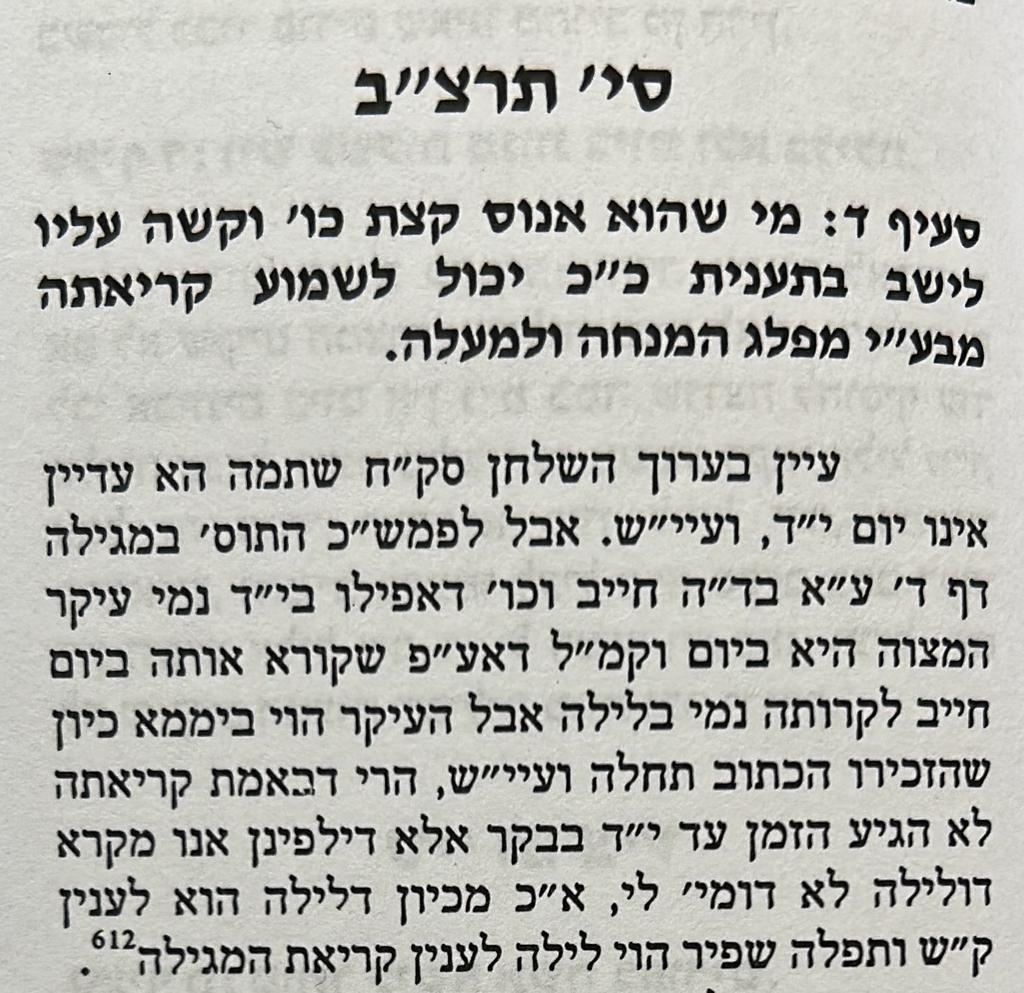
וְאָמַר רַבִּי יְהוֹשֻׁעַ בֶּן לֵוִי: חַיָּיב אָדָם לִקְרוֹת אֶת הַמְּגִילָּה בַּלַּיְלָה וְלִשְׁנוֹתָהּ בַּיּוֹם, שֶׁנֶּאֱמַר: ״אֱלֹהַי אֶקְרָא יוֹמָם וְלֹא תַעֲנֶה וְלַיְלָה וְלֹא דוּמִיָּה לִי״.

And Rabbi Yehoshua ben Levi further said with regard to Purim: A person is obligated to read the Megilla at night and then to repeat it [lishnota] during the day, as it is stated: “O my God, I call by day but You do not answer; and at night, and there is no surcease for me” (Psalms 22:3), which alludes to reading the Megilla both by day and by night.

The teaching of Reb Yehoshua ben Levi can seen in two ways.
1. The main reading is by night, and the daytime reading is just a reviewt.
2. The night reading is a rehearsal in order to get us more acquainted with the story so that we can have a deeper and clearer understanding of the main Megilla reading by day.
Perhaps we can find the answer in the way Reb Yaakov Kamenetzky understands a famous Gemara in Sanhedrin. The Gemara says:

Rabbi Yehoshua ben Korḥa says: Anyone who studies Torah and does not review it is comparable to a person who sows and does not reap.
The Gemara is teaching us the correct way to view review. Most people think the first time learning something is the ikkar, whereas the review is just a "nice thing". But the Gemara is teaching us that the first learning is just the preperatiry "planting" stage, and the review is where the real reward comes.
According to this, our Gemara in Megilla can be understood the same way. The night reading isn't the main reading while the day is "just review", rather the night reading is planting the seeds to have a more rewarding and meaningful day reading which is the main event.
This is also the opinion of Turei Even (Megilla 4a)
The Rishonim (Rashba & Tosfos to Megilla 4a, Rambam, Rokeach, Tosefta, R' Moshe Shterbuch) imply that the night kriah is not a low level DeRabbanan, rather it is also a fulfillment of the enactment of Chazal as a Divrei Kabbala. Therefore, it should be treated with the same strictness as the day reading, and shouldn't be taken lightly.
In Emes L'Yaakov on Shulchan Aruch, R' Yaakov seems to be learning even in Tosfos that the night is more lenient.
Even according to those who hold that night kriah is a low level DeRabbanan, there is a an aspect of pirsumei nissa that can only be achieved in the night kriah.
The Rema says:

הגה אבל אסור לאכול קודם שישמע קריאת המגילה אפי' התענית קשה עליו (תה"ד סי' ק"ט):

However, it is prohibited to eat before hearing krias Megilla even if the fast is hard for one.

The Poskim argue based on the wording of the Rema if it is only a large amount that a person cannot eat, but tasting is permitted, or if even tasting is prohibited. Magen Avraham writes that tasting is okay before krias Megilla.

...ועוד דעיקר קריאת המגילה ביום, ונ"ל דמש"ה שינה רמ"א לשונו וכתב אסור לאכול וכו' משמע דטעימה שרי ומ"מ אין להקל אלא לצורך גדול

Elya Rabba disagrees and maintains that even a small taste is be prohibited. Since a person is fasting, he is very likely to come to eat more than a taste and break his fast. He writes:

(יא) [יא] לאכול וכו'. משמע טעימה שרי כמו בקריאת שמע סימן רל"ה מכל מקום אין להקל אלא לצורך גדול (מגן אברהם).

וגם נראה לי כיון ששרוי בתענית אם נתיר לו טעימה ודאי ימשך לאכולי, אכן במהרי"ל גבי תענית בכורים שמתענין ביום חמישי כשחל פסח בשבת מתיר טעימה קודם בדיקת החמץ:

To avoid the question of this being a gezerira l'gezeira (tasting lest one eat, and eating lest one miss Megilla) we were madayek from the Elya Rabba that tasting on a fast day isnt' a gezeira that maybe one may come to eat, rather if one tastes on a fast day, he is surely going to come to a significant eating, so tasting is really part of the original gezeira of eating before having fulfilled a mitzvah)
As to what the gezeira is, R' Eliashev (Ashrei HaIsh) says that we are afraid one might come to not hear the Megilla betzibbur.
Terumas HaDeshen himself implies the gezeira is be that one might come to fall asleep and miss the Megilla entirely.)
R' Eliashev gives another reason why a person shouldn't eat before Megilla: Since people are fasting from Taanis Esther, by continuing to fast with them into the krias Megilla is connecting the pirsumei nissa of Taanis Esther with the Pirsumei Nisa of Mikra Megilla.
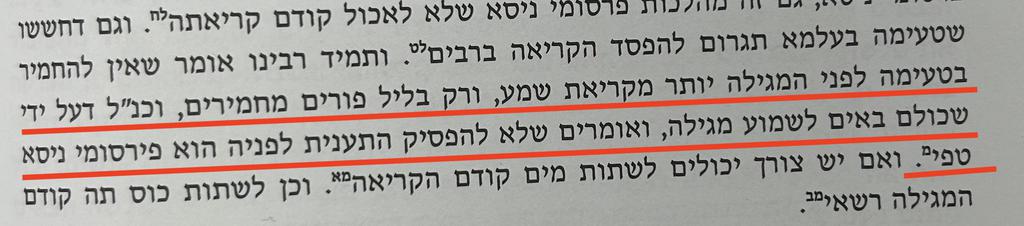
One may taste food before Megilla reading if there is a need.
Night kriah is just as stringent as the day kriah, except for by night one can be maykel with a safek whereas by day one should try to hear it again.
-- -- --
Where do we find pirsum hanes of Taanis Esther (13th of Adar)?
Rashi writes:
זמן קהלה לכל היא - הכל נקהלו להנקם מאויביהם בין בשושן בין בשאר מקומות כמו שכתוב בספר.
הלכך לא צריך קרא לרבויי שיהא ראוי לקרייה דעיקר הנס בו היה.
We see from here that the fast of the 13th isn't like other fasts as being a sad time, rather it is the main day of the miracle!
Accordingly, one can say that the fast itself is an of pirsum hanes and therefore it was established to connect the pirsum hanes of the fast to the pirsum hanes of the Megilla.
Parenthtically, what exactly was the miracle we are celebrating that occured on the 13th?
Simply, the miracle was that the decree to exterminate the Jews was reversed and the Jews were permitted by the regime to defend themselves to slay their enemies, as the passuk says:

(יא) אֲשֶׁר֩ נָתַ֨ן הַמֶּ֜לֶךְ לַיְּהוּדִ֣ים ׀ אֲשֶׁ֣ר בְּכׇל־עִיר־וָעִ֗יר לְהִקָּהֵל֮ וְלַעֲמֹ֣ד עַל־נַפְשָׁם֒ לְהַשְׁמִיד֩ וְלַהֲרֹ֨ג וּלְאַבֵּ֜ד אֶת־כׇּל־חֵ֨יל עַ֧ם וּמְדִינָ֛ה הַצָּרִ֥ים אֹתָ֖ם טַ֣ף וְנָשִׁ֑ים וּשְׁלָלָ֖ם לָבֽוֹז׃(יב) בְּי֣וֹם אֶחָ֔ד בְּכׇל־מְדִינ֖וֹת הַמֶּ֣לֶךְ אֲחַשְׁוֵר֑וֹשׁ בִּשְׁלוֹשָׁ֥ה עָשָׂ֛ר לְחֹ֥דֶשׁ שְׁנֵים־עָשָׂ֖ר הוּא־חֹ֥דֶשׁ אֲדָֽר׃

(11) to this effect: The king has permitted the Jews of every city to assemble and fight for their lives; if any people or province attacks them, they may destroy, massacre, and exterminate its armed force together with women and children, and plunder their possessions—(12) on a single day in all the provinces of King Ahasuerus, namely, on the thirteenth day of the twelfth month, that is, the month of Adar.

But if this is so, why is that a reason to celebrate? We were only just given the right to defend oursleves? At most it gives us a glimmer of hope to survive an onslaught, but why is that a day to celebrate?
We answered that the miracle was that the non Jews were so afraid of the Jews' climb to power in the government that they didn't even attempt to kill them!
(I'd like to suggest a deeper connotation of this miracle based on a shmuess R' Rudinsky gave on Parshas Bo.
In preparartion to leaving Mitzrayim, the passuk says that the Jews went to the Egyptians to "borrow" vessels and clothing. At first glance the significance of this seems to be unclear. Why did the passuk go out of its way to tell us this?
Another question is the puzzling Gemara in Berachos which says:

״דַּבֶּר נָא בְּאָזְנֵי הָעָם״ וְגוֹ׳. אָמְרִי דְּבֵי רַבִּי יַנַּאי: אֵין ״נָא״ אֶלָּא לְשׁוֹן בַּקָּשָׁה, אָמַר לֵיהּ הַקָּדוֹשׁ בָּרוּךְ הוּא לְמֹשֶׁה: בְּבַקָּשָׁה מִמְּךָ, לֵךְ וֶאֱמוֹר לָהֶם לְיִשְׂרָאֵל: בְּבַקָּשָׁה מִכֶּם, שַׁאֲלוּ מִמִּצְרַיִם כְּלֵי כֶסֶף וּכְלֵי זָהָב, שֶׁלֹּא יֹאמַראוֹתוֹ צַדִּיק, ״וַעֲבָדוּם וְעִנּוּ אֹתָם״ — קִייֵּם בָּהֶם, ״וְאַחֲרֵי כֵן יֵצְאוּ בִּרְכֻשׁ גָּדוֹל״ — לֹא קִייֵּם בָּהֶם.

With regard to the verse: “Speak, please [na] in the ears of the people, and they should borrow, every man from his fellow and every woman from her fellow, silver and gold vessels” (Exodus 11:2), the word please [na] is unclear. The students of the school of Rabbi Yannai said: Please [na] is nothing more than an expression of supplication. Why would God employ an expression of supplication in approaching Israel? The Gemara explains that the Holy One, Blessed be He, said to Moses: I beseech you, go and tell Israel: I beseech you; borrow vessels of silver and vessels of gold from the Egyptians in order to fulfill the promise I made to Abraham in the “Covenant between the Pieces,” so thatthat righteous person, Abraham, will not say: God fulfilled His pronouncement: “And they will be enslaved and afflicted,” but God did not fulfill His pronouncement: “And afterward, they will leave with great possessions.” As God said to Abraham: “Surely you shall know that your descendants will be foreigners in a land that is not theirs, and they will be enslaved and afflicted for four hundred years. And also that nation who enslaves them will I judge. And afterward, they will leave with great possessions” (Genesis 15:13–14).

The question is obvious, did Avraham really doubt Hashem keeping His end of the deal?
Additionally, why is Avraham referred to here as "oso tzaddik"?
The answer we gave was that if you look at the bigger picture, the scenario of Klal Yisrael asking to borrow items from the Egyptians couldn't have come at a worse time for the Egyptians. Makkas Bechoros had just killed all of the firstborns in the land of Egypt and the passuk says that every household was affected.
Now picture a Jew walking into the "shiva house" asking to borrow their Cuisinart! The chutzpah! The visceral reaction should have been to throw them out .
But instead they dutifully obliged (after a little bit of "reminding" them where they had put them last )
Avraham wasn't necassarily interested in them taking the items, that he had faith that Hashem would fulfill.
Avraham wanted the Jews to experience something deeper. After Klal Yisrael had done so many mitzvos, he asked Hashem to give them a chein that only comes as a product from the kedusha of the mitzvos, its potency so great that they would be graned even the seemiongly most audacious request to borrow a tuxedo frrom a person in the throes of mourning - and get it!
Perhaps here too in the Purim story, the neis on the 13th wasn't necassaily the fact that we were goven the oppurtunity to defend oursleves, but that the Jews were granted the kedusha from the teshuva they had done to protect them frrom even an attempt to kill them out of respect and chein they had garnered in their eyes.)
-- -- --
In order to further increase the pirsumei nissa during the day, one should daven as early as possible. The reason is because once the Megilla is read, the pirsumei nissa begins. Therefore, the earlier you read the megilla, the more pirsumei nissa the day will have.
It is even more important to daven earlier with a smaller minyan to get a head start on the pirsumei nissa, than to daven later with a larger minyan with berov am.
The proof that pirsumei nissa is not limited to the Megilla reading, rather it is the impetus to further pirsumei nissa throughout the day can be inferred from a Gemara in Megilla. The Gemara says:

וְהַלּוֹעֵז שֶׁשָּׁמַע אַשּׁוּרִית יָצָא וְכוּ׳. וְהָא לָא יָדַע מַאי קָאָמְרִי? מִידֵּי דְּהָוֵה אַנָּשִׁים וְעַמֵּי הָאָרֶץ.מַתְקֵיף לַהּ רָבִינָא: אַטּוּ אֲנַן ״הָאֲחַשְׁתְּרָנִים בְּנֵי הָרַמָּכִים״, מִי יָדְעִינַן? אֶלָּא מִצְוַת קְרִיאָה וּפַרְסוֹמֵי נִיסָּא, הָכָא נָמֵי — מִצְוַת קְרִיאָה וּפַרְסוֹמֵי נִיסָּא.

It was taught in the mishna: And one who speaks a foreign language who heard the Megilla being read in Ashurit, i.e., in Hebrew, has fulfilled his obligation. The Gemara asks: But isn’t it so that he does not understand what they are saying? Since he does not understand Hebrew, how does he fulfill his obligation? The Gemara answers: It is just as it is with women and uneducated people; they too understand little Hebrew, but nevertheless they fulfill their obligation when they hear the Megilla read in that language.Ravina strongly objects to the premise of the question raised above, i.e., that someone who does not understand the original, untranslated language of the Megilla cannot fulfill his obligation. Is that to say that even we, the Sages, who are very well acquainted with Hebrew, know for certain the meaning of the obscure words ha’aḥashteranim benei haramakhim (Esther 8:10), often translated as: “Used in the royal service, bred from the stud”? But nevertheless, we fulfill the mitzva of reading the Megilla and publicizing the miracle of Purim by reading these words as they appear in the original text. Here too, one who speaks a foreign language who hears the Megilla being read in Hebrew fulfills the mitzva of reading the Megilla and publicizing the Purim miracle, even if he does not understand the words themselves.

(1) ופרסומי ניסא - אע"פ שאין יודעין מה ששומעין שואלין את השומעין ואומרין מה היא הקרייה הזו ואיך היה הנס ומודיעין להן:

Even if they don't understand what they are hearing, they ask the ones who did hear [and understood] what the kriah was about and how the miracle occurred - and they [the ones who understood] inform them.

We see that the pirsumei nisa of krias Megilla isn't confined to the kriah "production," rather is also meant to be a springboard explore the story and the miracle of the Jews' salvation.
One should try to read the Megilla as early as he can on Purim morning.
-- -- --
I'd like to pivot to a more "drush" note to get a better understanding of how the neis of Purim unfolded.
In truth, by explaining how the neis unfolded isn't a pivot, rather it can be seen as a fulfillment of the ikkar mitzvah of pirsumei nissa, which Rashi above alludes to, ואיך היה הנס.
Shulchan Aruch says:

(יז)הגה יש שכתבו שנוהגין לומר ד' פסוקים של גאולה בקול רם דהיינו

1. איש יהודי וגו'

2. ומרדכי יצא וגו'

3. ליהודים היתה אורה וגו'

4. כי מרדכי היהודי וגו' וכן נוהגין במדינות אלו [הגהות מיימוני פ"א וכל בו ואבודרהם] והחזן חוזר וקורא אותן.

(17)RAMA: There is what is written that we say four verses of redemption in a loud voice, [the verses are]

1."A Jewish Man",

2."And Mordechai went out",

3."The Jews had light",

4."Because Mordechai the Jew" and such is the custom in our lands. [Hagahos Maimoni; Kol Bo; Avudraham]. And then the reader goes back and reads these verses.

It is interesting that all of the "verses of redemption" have to do with Mordechai. Although Mordechai is the undisputed hero of the Purim story, why are each of the pesukim about the redemption centered around Mordechai?
Even the passuk of "And the Jews had light" which doesn't make reference to Mordechai is interpreted by Manos HaLevi to be connected to the passuk right before it, which does mention Mordechai, as it is written:

(טו)וּמׇרְדֳּכַ֞י יָצָ֣א ׀ מִלִּפְנֵ֣י הַמֶּ֗לֶךְ בִּלְב֤וּשׁ מַלְכוּת֙ תְּכֵ֣לֶת וָח֔וּר וַעֲטֶ֤רֶת זָהָב֙ גְּדוֹלָ֔ה וְתַכְרִ֥יךְ בּ֖וּץ וְאַרְגָּמָ֑ן וְהָעִ֣יר שׁוּשָׁ֔ן צָהֲלָ֖ה וְשָׂמֵֽחָה׃(טז)לַיְּהוּדִ֕ים הָֽיְתָ֥ה אוֹרָ֖ה וְשִׂמְחָ֑ה וְשָׂשֹׂ֖ן וִיקָֽר׃

(15)Mordecai left the king’s presence in royal robes of blue and white, with a magnificent crown of gold and a mantle of fine linen and purple wool. And the city of Shushan rang with joyous cries.(16)The Jews enjoyed light and gladness, happiness and honor.

The answer is that the reason why the Jews were put into the perilous situation in the first place was because of their mistake of not listening to Mordechai, the Gadol Hador.
Chazal say that Mordechai had told the Jews who were invited to Achashverosh's party not to attend it. As thnavi and the Gadol Hador, he knew the big-picture ramifications if they were to go, and was adamant that they stay away from the sinful feast.
But the Jews thought they knew better than Mordechai. They brushed off his warnings, and considered his advise old-fashioned and out of touch with reality.
They believed that going to the feast would engender good will between the king and the Jews, and skipping out on the feast could be seen as flaunting his authority and a dangerous move.
But, despite their good intentions, they were wrong.
The very act of ignoring Mordechai's words and attending the seuda was what kicked off the events leading to their near annihilation, as the Gemara says:
See Kisvei HaSaba MiKelm who also explains this way.

שָׁאֲלוּ תַּלְמִידָיו אֶת רַבִּי שִׁמְעוֹן בֶּן יוֹחַאי: מִפְּנֵי מָה נִתְחַיְּיבוּ שׂוֹנְאֵיהֶן שֶׁל יִשְׂרָאֵל שֶׁבְּאוֹתוֹ הַדּוֹר כְּלָיָה? אָמַר לָהֶם: אִמְרוּ אַתֶּם. אָמְרוּ לוֹ: מִפְּנֵי שֶׁנֶּהֱנוּ מִסְּעוּדָתוֹ שֶׁל אוֹתוֹ רָשָׁע...

The students of Rabbi Shimon bar Yoḥai asked him: For what reason were the enemies of Jewish people, a euphemism for the Jewish people themselves when exhibiting behavior that is not in their best interests, in that generation deserving of annihilation? He, Rabbi Shimon, said to them: Say the answer to your question yourselves. They said to him: It is because they partook of the feast of that wicked one, Ahasuerus, and they partook there of forbidden foods...

In order for the geula to come, Klal Yisrael needed to rectify their flouting of the Gedolim's words based on their own judgement, and show unwavering respect and commitment to Mordechai, even if his directions seemed absurd or counter-productive.
The oppurtunity presented to Klal Yisrael when Mordechai announced the Taanis on a very peculiar day... The Gemara says:

״וַיַּעֲבוֹר מָרְדֳּכָי״. אָמַר רַב: שֶׁהֶעֱבִיר יוֹם רִאשׁוֹן שֶׁל פֶּסַח בְּתַעֲנִית.

“So Mordecai passed [vaya’avor]” (Esther 4:17). Rav said: This means that he passed the first day of Passover as a fast day, understanding the word vaya’avor in the sense of sin [aveira], as by doing so he transgressed the obligation to rejoice on the Festival.

Klal Yisrael could have come up with hundreds of reasons to dismiss Mordechai's directive out of hand - "Skip the Pesach Seder? The holiday that celebrates the very existence of Klal Yisrael? What about the mitzvos of Matzah and Marror..."
Yet, Klal Yisrael held their objections and listened to Mordechai, thereby rectifying the sin which had been until now fueling their destruction.
And on that very day, the miraculous salvation occured, and the Jews were saved.
Now we can understand why Mordechai is mentioned in all of the pesukim of the geula. Since it was through Klal Yisrael retuning the honor and trust in Mordechai who represented the Torah scholar of the generation, that itself brought about the geula.
------
Addendum:
Maharsha (Megilla 10b s.v. Zeh) says that although Mordechai had other names (such as Pesachya) but he is referred in the Megilla by his Mordechai, because the Gemara in Chullin infers that the name Mordechai denotes respectability and being recognized as a leader.
In this light, the mention of Mordechai - specifically that name - is recited by the congregation because it is a nod to our respecting the Gedolim and showing them reverence.
If we dive into that Gemara in Chullin, we can find another beautiful perspective into how we need to show reverence to our Gedolim. The Gemara in Chullin reads:

מרדכי מן התורה מנין דכתיב (שמות ל, כג) מר דרור ומתרגמינן מירא דכיא:

From where in the Torah can one find an allusion to the greatness bestowed upon Mordecai? He replied: As it is written with regard to the anointing oil in the Tabernacle: “And you shall also take the chief spices, of flowing myrrh [mor deror]” (Exodus 30:23); and we translatemor deror into Aramaic as: Mira dakhya, which resembles the name Mordecai.

We can ask two questions on this Gemara's allusion to Mordechai:
1. What is the connection between Mordechai and the anointing oil?
2. Why is Mordechai only referred to in the Targum Onkelos and not in the passuk itself?
R' Rudinsky answered with a yesod from R' Shach. The Gemara in Bava Metzia says:

תנן התם חתכו חוליות ונתן חול בין חוליא לחוליא ר"א מטהר וחכמים מטמאיןוזה הוא תנור של עכנאי.

מאי עכנאי אמר רב יהודה אמר שמואל שהקיפו דברים כעכנא זו וטמאוהו.

תנא באותו היום השיב רבי אליעזר כל תשובות שבעולם ולא קיבלו הימנואמר להם אם הלכה כמותי חרוב זה יוכיח נעקר חרוב ממקומו מאה אמה ואמרי לה ארבע מאות אמה אמרו לו אין מביאין ראיה מן החרוב...

חזר ואמר להם אם הלכה כמותי מן השמים יוכיחו יצאתה בת קול ואמרה מה לכם אצל ר"א שהלכה כמותו בכ"מעמד רבי יהושע על רגליו ואמר (דברים ל, יב) לא בשמים היא

We learned in a mishna there (Kelim 5:10): If one cut an earthenware oven widthwise into segments, and placed sand between each and every segment, Rabbi Eliezer deems it ritually pure. Because of the sand, its legal status is not that of a complete vessel, and therefore it is not susceptible to ritual impurity. And the Rabbis deem it ritually impure, as it is functionally a complete oven.And this is known as the oven of akhnai.

The Gemara asks: What is the relevance of akhnai, a snake, in this context? Rav Yehuda said that Shmuel said: It is characterized in that manner due to the fact that the Rabbis surrounded it with their statements like this snake, which often forms a coil when at rest, and deemed it impure.

The Sages taught: On that day, when they discussed this matter, Rabbi Eliezer answered all possible answers in the world to support his opinion, but the Rabbis did not accept his explanations from him.After failing to convince the Rabbis logically, Rabbi Eliezer said to them: If the halakha is in accordance with my opinion, this carob tree will prove it. The carob tree was uprooted from its place one hundred cubits, and some say four hundred cubits. The Rabbis said to him: One does not cite halakhic proof from the carob tree...

Rabbi Eliezer then said to them: If the halakha is in accordance with my opinion, Heaven will prove it. A Divine Voice emerged from Heaven and said: Why are you differing with Rabbi Eliezer, as the halakha is in accordance with his opinion in every place that he expresses an opinion?Rabbi Yehoshua stood on his feet and said: It is written: “It is not in heaven” (Deuteronomy 30:12).

As to why R' Eliezer felt the halacha was in accordance with him even though the Halacha usually follows the majority view, see Yerushalmi in Moed Katan ().
R' Shach asks, if the miracles and heavenly voices weren't a proof to the Halacha being like R' Eliezer, then what was their purpose? Did Hashem just put them there as a "fake-out?"
R' Nissim Gaon says the reason Hashem did those miracles was to test them, to demonstrate that even though a MIRACLE is telling you to not listen to the Torah, one should not be persuaded by it.
R' Shach brings a proof to this R' Nissim Gaon from a Gemara in Kerisos. The Gemara says:

מתני׳ שלשים ושש כריתות בתורה... והסך את השמן המשחה

MISHNA: There are thirty-six cases in the Torah with regard to which one who performs a prohibited action intentionally is liable to receive excision from the World-to-Come [karet]...

And the same is the punishment of one who blends the anointing oil according to the specifications of the oil prepared by Moses in the wilderness. (see Exodus 30:22–33)

But in order to be liable, one needs to make an exact copy the oil mixture.

(א) שהזהירנו מעשות שמן כמו שמן המשחה, והוא אמרו יתעלה ובמתכונתו לא תעשו כמוהו. והעובר על לאו זה אם היה מזיד חייב כרת...

(1) That He prohibited us from making oil like the anointing oil. And that is His, may He be exalted, saying, "neither shall you make any other like it, after the composition of it" (Exodus 30:32). And one who transgresses this negative commandment - if he was volitional, he is liable for excision...

(א) שלא לעשות במתכנת שמן המשחה - שלא לעשות שמן המשחה, שנאמר (שמות ל לב) ובמתכנתו לא תעשו.ושאין חיבין על עשיתו אלא כשעשאוהו בסכום סממניו, וזהו לשון במתכנתו מלשון חשבון כלומר, בחשבון סממניו. ויתר פרטיה מבארים בפרק ראשון מכריתות [שם].

(ג) ונוהגת מצוה זו של אסור עשית השמן בכל מקום ובכל זמן בזכרים ונקבות. והעובר עליה ועשה ממנו במזיד, חיב כרת, בשוגג, חיב חטאת קבועה.

(1)To not make [oil] according to the specification of the anointing oil: To not make the anointing oil, as it is stated (Exodus 30:32), "and you shall not make according to its specification."

One is not liable for its making unless he makes it according to the amount of its spices, and that is the [meaning of the] expression, "specification,' which expresses a calculation, [as] in the calculation of its spices; and the rest of its details - are elucidated in the first chapter of Keritot.

(3) And this commandment of the prohibition of making the oil is practiced in every place and at all times by males and females. And one who transgresses it and made of it volitionally is liable for excision; [and, if] accidental, a fixed sacrifice.

R' Shach asks, that the Gemara says that the anointing oil mixture was made with a miracle, because using the measurements prescribed by the Torah, the oil would have become absorbed into the spices, and there wouldn't be any oil to annoint!
We see from here, that Hashem can make a MIRACLE for someone in making the shemen hamishcha, and at the same time a person can bring kares upon himself.
Now we can understand why Mordechai is alluded to in the shemen hamishcha. Shemen HaMishcha teaches us not to rely on our own justifications or signs to be a determining factor as to whether something is right or wrong. Even when all signs point one way, if Chazal say that it is wrong, it is wrong!
Klal Yisrael's relationship with Mordechai in the Purim story encapsulated this idea. At first Mordechai's advice not to go to Achashverosh's party and his open refusal to bow to Haman was met with disdain and disapproval from Klal Yisarel.
Only once they began to trust his leadership and his Torah scholarship were they able to experience the yeshua.
I think this can also explain why the allusion to Mordechai is found in the Targum Onkelos and not in the passuk itself.
The simple approach as to why the allusion is in Targum Onkelos is because Targum Onkelos represents the Torah She'Baal Peh interpretation of the simple meaning of the Torah, which connects to listening to Chazal and their interpretation of the Torah.
(See Bnei Yissaschar, Nissan)
I think there is another connection between the message of Shemen HaMishcha, and Mordechai's allsuion being soaked in Onkelos.
The passuk says in Megillas Esther:

(ח) וַיְהִ֗י בְּהִשָּׁמַ֤ע דְּבַר־הַמֶּ֙לֶךְ֙ וְדָת֔וֹ וּֽבְהִקָּבֵ֞ץ נְעָר֥וֹת רַבּ֛וֹת אֶל־שׁוּשַׁ֥ן הַבִּירָ֖ה אֶל־יַ֣ד הֵגָ֑י וַתִּלָּקַ֤ח אֶסְתֵּר֙ אֶל־בֵּ֣ית הַמֶּ֔לֶךְ אֶל־יַ֥ד הֵגַ֖י שֹׁמֵ֥ר הַנָּשִֽׁים׃

(ט) וַתִּיטַ֨ב הַנַּעֲרָ֣ה בְעֵינָיו֮ וַתִּשָּׂ֣א חֶ֣סֶד לְפָנָיו֒ וַ֠יְבַהֵ֠ל אֶת־תַּמְרוּקֶ֤יהָ וְאֶת־מָנוֹתֶ֙הָ֙ לָתֵ֣ת לָ֔הּ וְאֵת֙ שֶׁ֣בַע הַנְּעָר֔וֹת הָרְאֻי֥וֹת לָֽתֶת־לָ֖הּ מִבֵּ֣ית הַמֶּ֑לֶךְ וַיְשַׁנֶּ֧הָ וְאֶת־נַעֲרוֹתֶ֛יהָ לְט֖וֹב בֵּ֥ית הַנָּשִֽׁים׃

(י) לֹא־הִגִּ֣ידָה אֶסְתֵּ֔ר אֶת־עַמָּ֖הּ וְאֶת־מֽוֹלַדְתָּ֑הּ כִּ֧י מׇרְדֳּכַ֛י צִוָּ֥ה עָלֶ֖יהָ אֲשֶׁ֥ר לֹא־תַגִּֽיד׃ {ס}

(8) When the king’s order and edict was proclaimed, and when many girls were assembled in the fortress Shushan under the supervision of Hegai, Esther too was taken into the king’s palace under the supervision of Hegai, guardian of the women.

(9) The girl pleased him and won his favor, and he hastened to furnish her with her cosmetics and her rations, as well as with the seven maids who were her due from the king’s palace; and he treated her and her maids with special kindness in the harem.

(10) Esther did not reveal her people or her kindred, for Mordecai had told her not to reveal it.

R' Gedalya Anemer explained (presumably based on the chronology of the pesukim), the reason Mordechai had initially told Esther to hide her nationality was because Esther had initially tried hiding from the "draft" and when she was found she was brought forcibly to the palace.
That being the case, if Achashverosh knew her nationality, he may have taken revenge on her and her nation - the Jews. Therefore, out of concern of national security, he told her to keep her identity top secret.
But after the king had shown a liking to her, she figured to herself that the concern was no longer a concern, and she didn't need to be so careful not to leak her nationality to Achashverosh.
Therefore the passuk emphasizes at that juncture of time, that the reason Esther didn't reveal her identity was for one reason alone because Mordechai told her not to.
Throughout Onkelos, you will find that Onkelos sometimes veers from the simple translation of the passuk to instead focus on the implied meaning of the verse.*
In this scenario too, we see that Esther is listening to Mordechai not necessarily because of the initial "simple" explanation behind keeping her identity secret, but even when that reason seemed to be moot, she trusted in an implicit reason she isn't necessarily privy to to nevertheless keep her unwavering deference to Mordechai's command.
Perhaps its for this reason Mordechai - the name title of the respected Gadol Hador, is referred to in Shemen HaMishcha - the symbol of listening to the Gedolim even when all signs seem to point in the other direction - in Targum Onkelos - the commentary which focuses on the underpinnings of the meanings of the Torah's laws that aren't readily seen on the surface, similar to the Gadol's counsel which isn't necessarily apparent on the surface, but whose counsel bears the stamp of Hashem's will to trust in our Gedolim.
* See Onkelos to Vayikra 12:2, ArtScroll Edition, et. al.