


(6) So Isaac stayed in Gerar. (7) When the local leaders*local leaders Or “locals.” Heb. ’anshe ha-maqom; NJPS “the men of the place.” Cf., e.g., Gen. 34.20; Judg. 8.15–17. See the Dictionary under ’ish. asked him about his wife, he said, “She is my sister,” for he was afraid to say “my wife,” thinking, “The local leaders might kill me on account of Rebekah, for she is beautiful.” (8) When some time had passed, Abimelech king of the Philistines, looking out of the window, saw Isaac fondling his wife Rebekah. (9) Abimelech sent for Isaac and said, “So she is your wife! Why then did you say: ‘She is my sister’?” Isaac said to him, “Because I thought I might lose my life on account of her.” (10) Abimelech said, “What have you done to us! One of the men*men NJPS “people.” See the Dictionary under ‘am. might have lain with your wife, and you would have brought guilt upon us.” (11) Abimelech then charged all the people, saying, “Anyone who molests this man or his wife shall be put to death.” (12) Isaac sowed in that land and reaped a hundredfold the same year. יהוה blessed him,
His family's survival depended on it.
With the weight of responsibility pressing down on him, he decided to make a perilous journey from Beer Lachai Roi to Gerar, where the wise King Avimelech ruled, hoping that the city could offer them refuge.
As Yitzchak approached the city gates, a knot tightened in his stomach. The border guards, with suspicious eyes and stern faces, stood like sentinels ready to question any stranger who dared to seek entry during these desperate times. Yitzchak, though a man of resilience, knew he had to tread carefully.
"State your business," the burly guard demanded, eyeing Yitzchak's crew with suspicion.
"My good sirs," Yitzchak began, gesturing dramatically, "allow me to introduce myself. I am Yitzchak, and this is my dear sister, Rivkah.
Now, these charming youngsters," he pointed to the children, "are from my previous marriage, and let me tell you, my friends, I've taken it upon myself to be the shining beacon in their lives!"
As Yitzchak wove a tale of familial responsibility and commitment, the guards, initially stern, found themselves wiping away tears. One guard, overcome with emotion, muttered, "Oh, bless his soul for being such a devoted brother and father figure!"
The other guard nodded in agreement, looking as though he had just witnessed the most heartwarming soap opera unfold before his eyes. "I never thought a border security job would bring me to the brink of tears. What a man!"
Yitzchak seized the opportunity, playing up the emotional card with a theatrical flair. "It hasn't been easy, my friends, but love conquers all! Now, if you'd be so kind as to let us into your fine city, we'll be eternally grateful."
The guards, still sniffling, exchanged glances and nodded in unison. "Of course, kind sir! Enter, and may your tale of familial love be an inspiration to us all!"
And with that, Yitzchak and his family walked triumphantly into the city, leaving the guards behind, convinced that they had just witnessed the greatest display of familial devotion in the history of border security.
Once inside the city, Yitzchak was ushered into the grand presence of Avimelech. The king, wise and discerning, saw to welcome the family into his city.
Life in Gerar was a respite from the harsh realities of the famine. Yitzchak and his family were placed in regal accommodations, surrounded by the generosity of Avimelech and his servants.
But as the days passed, the once-barren lands outside the city gates began to flourish again. The famine's grip loosened, and Yitzchak, through diligence and Hashem's blessing, amassed wealth beyond imagination.
Yitzchak's riches outshone even those of Avimelech, and the people began to jest about the once-humble newcomer surpassing the king in wealth. The papers made jokes about how Yitzchak's wealth was practically dwarfing Avimelech's riches. This was done on purpose, to arouse jealousy in Avimelech so that he would banish Yitzchak from Gerar.
Fearing a potential threat to his own rule, Avimelech made the difficult decision to exile Yitzchak and his family from Gerar. The once-royal accommodations now felt like a distant dream as Yitzchak embarked on a new chapter of his life, post-Avimelech resort days.
ויהי מקץ שלושה חודשים לשבת יצחק בארץ, וישקף אבימלך בעד החלון וירא והנה יצחק מצחק את רבקה אישתו. כי ישב יצחק בבית המלך החיצונה, ותהי בית יצחק נגד בית המלך. ויאמר המלך אל יצחק, מה הדבר הזה אשר עשית לנו באמרך על אישתך אחותי היא. כמעט שכב אחד העם מגדוליהם את אישתך, והבאת עלינו אשם. ויאמר יצחק אל אבימלך כי יראתי פן אמות על אישתי, על כן אמרתי אחותי היא. בעת ההיא ציוה אבימלך לכל שריו וגדוליו, ויקחו את יצחק ואת רבקה אישתו ויביאום לפני המלך. ויצו המלך וילבישו את שניהם לבוש מלכות, וירכיבום ברחוב העיר. ויקראו לפניהם בכל הארץ לאמור "זה האיש וזאת אישתו, כל הנוגע באיש הזה ובאישתו מות יומת". וישב יצחק ואישתו בית המלך, ויהי ה׳ את יצחק וילך הלוך וגדל לא חסר דבר. ויתן ה׳ את יצחק לחן בעיני אבימלך ובעיני כל עבדיו, ויעש אבימלך עם יצחק טובה. כי זכר אבימלך את השבועה ואת הברית, אשר היה בין אביו ובין אברהם. ויאמר אבימלך אל יצחק המה כל הארץ לפניך, כטוב בעיניך שב עד אשר תשוב אל ארצך. ויתן אבימלך ביד יצחק שדות וכרמים ומיטב ארץ גרר לזרוע ולקצור ולאכול את פרי האדמה, עד אשר יכלו ימי הרעב.
And when he heard them say that Isaac proclaimed her to be his sister, the king kept that within himself. And when Isaac had dwelt in the land for three months, Abimelech looked out through the window and behold Isaac was very affectionate to Rebekah, his wife; for Isaac dwelt in one of the king's out-houses, which was opposite to the king's own house. And the king said unto Isaac: What is this thou hast done unto us? one of the people might lightly have come near thy wife and thou shouldest have brought guiltiness upon us. And Isaac replied unto Abimelech: Because I was in fear lest I die for her, therefore I proclaimed her to be my sister. And at that time Abimelech charged all his princes and nobles to take Isaac and his wife Rebekah, and to bring them unto the presence of the king. And the king gave orders to dress them in royal garments, and cause them to ride through the streets of the city, and to call out before them: This is the husband and this is his wife, and whosoever will touch this man or his wife shall surely be put to death. And Isaac returned unto the king's house, and the Lord was with Isaac and he continued to grow in greatness, and he lacked nothing. And the Lord caused Isaac to find favor in the eyes of the king and in the eyes of all his servants, and Abimelech did well with Isaac, for Abimelech well remembered the covenant which was cut between his father and Abraham.
Avimelech gave Yitzchak fields and orchards, the best of the city of Gerar, to plant, harvest, and eat, until the end of the fast...
וַיִּגְדַּל הָאִישׁ וַיֵּלֶךְ הָלוֹךְ וְגָדֵל, אָמַר רַבִּי חָנִין עַד שֶׁהָיוּ אוֹמְרִים זֶבֶל פִּרְדוֹתָיו שֶׁל יִצְחָק וְלֹא כַסְפּוֹ וּזְהָבוֹ שֶׁל אֲבִימֶלֶךְ.
“The man grew wealthy, and continued to grow until he became very wealthy” (Genesis 26:13). “The man grew wealthy, and continued to grow” – Rabbi Ḥanin said: To the extent that they would say: The manure of Isaac’s mules, and not Avimelekh’s silver and gold.18The manure from Isaac's mules was worth more than the Avimelekh’s gold and silver.
(ג) זבל פרדותיו כו' דכתיב עד כי גדל מאד לומר שבכל נכסיו גדל עד מאד מאבימלך. ולפי שלפי האמת לא יתכן שזבל פרדותיו יהיה יותר מנכסי אבימלך דקדק לומר שהיו אומרים כו' כלומר ע"ד גוזמא היו אומרים כן ואפשר כוונתם היה כדי להטיל עליו קנאה ואיבה:
*The wording of the passuk is "Vayaal" and Yitzchak went up to Be'er Sheva. However, Onkelos renders it as "u'selek" and he left to Be'er Sheva. Onkelos sometimes switches between rendering Vayaal literally (to go up) or in a looser translation of "to depart." Shaarei Aharon is left puzzled as to why he doesn't translate it literally here.
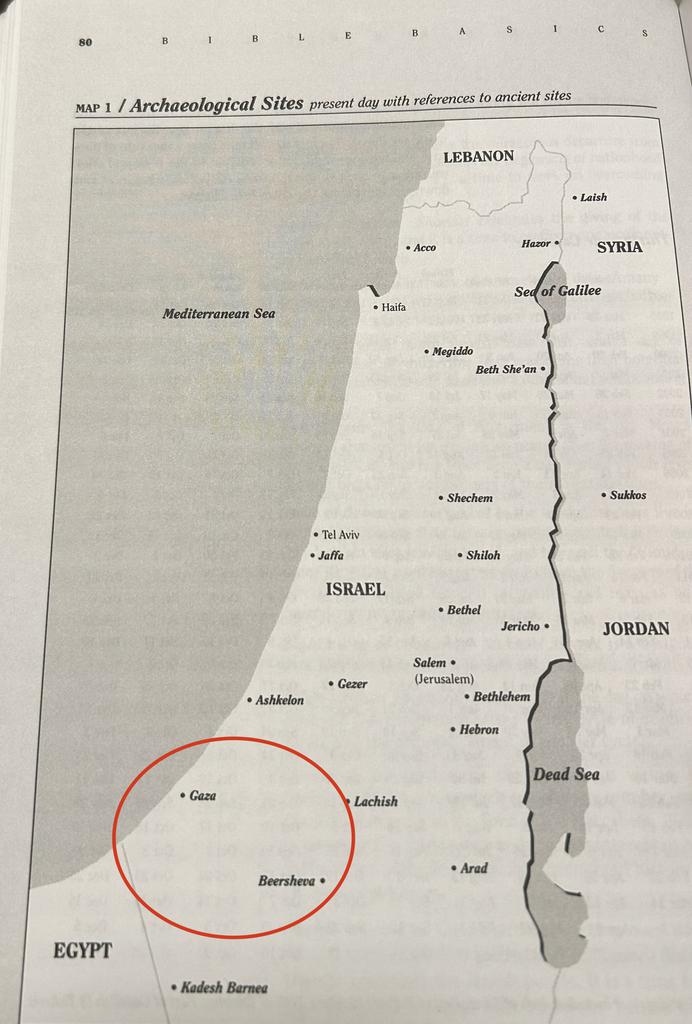
Perhaps the reason is because Be'er Sheva is located in due south of Gerar (see map below).
Radak defends the literal translation by saying that Be'er Sheva is on a higher topographical plain than Gerar.
(כג) וְאִסְתַּלַּק מִתַּמָּן בְּאֵר שָׁבַע:
(23) He went from there to Beer Sheva.
(א) ויעל משם באר שבע, קרוב היה לשם, כמו שכתבנו. ומה שאמר ויעל, כי ארץ ישראל המוחזקת היתה גבוה מארץ פלשתים, כמו שאמר ויעלו פלשתים (שופטים ט"ו) ויאמר שאול נרדה אחרי פלשתים (שמואל א' י"ד) וכן בכל מקום.
--
Yet, even as the vast desert stretched out between him and the Philistine workers, and Avimelech's kingdom became a distant horizon, Yitzchak couldn't shake the tendrils of fear tightening around his heart. It was in one of these sleepless moments that Hashem, the unseen orchestrator of fates, took notice.
A gentle whisper, like the rustle of desert winds, reached Yitzchak's ears. "Fear not, Yitzchak, for I am with you. In the merit of your father Avraham, I will shield you from harm and bestow blessings upon you."
Heartened by the divine assurance, Yitzchak wasted no time. He built a Mizbeach, he davened to Hashem, and he pitched his tent like a solitary silhouette against the vast canvas of the desert, and his servants, under the blistering sun, dug a well.*
Amidst the tranquil day, Yitzchak could never have predicted the divine interruption about to unfold. Hashem nudged the hearts of Avimelech, his friends, and Phichol** to grasp the error they had made breaching the covenant made during the times of Avraham.
“Yitzchak," Avimelech spoke, the words heavy with regret. "We tossed away the treasure*** of the covenant we had with your father. Now, we're here, hats in hand, asking you renew it with us. Will you, in your graciousness, consider it?"
Yitzchak, wise and weathered by the sands of time, nodded.
In that arid expanse of Be’er Sheva, they renewed the covenant.
(א) אל תירא כי אתך אנכי בעבור שהבריחו אבימלך מעליו מקנאתם בו וגם רועי גרר רבו עמו היה מתירא פן יאספו עליו ויכוהו הוא וביתו. והבטיחו הקב"ה שלא יירא מהם ויברך אותו.
ואז נתן בלבם שהלך לפניו המלך בכבוד גדול יותר מאשר עשה לאביו כי בא עם פיכול שר צבאו ועוד הוסיף להביא עמו רבים רעיו:
(כו) וְכַד נְפַק יִצְחָק מִגְרָר אִתְיַבְּשָׁן בֵּירֵיהוֹן וְאִילָנֵיהוֹן לָא עָבְדוּ פֵירִין וְאַרְגִישׁוּ דִבְגִין דְתָרִיכוּ יָתֵיהּ הֲוָה לְהוֹן כָּל דָא וְאָזַל אֲבִימֶלֶךְ לְוָותֵיהּ מִגְרָר וְאַתְקֵיף בְּרַחֲמוֹי לְמֵיזַל עִמֵיהּ וּפִכל רַב חֵילֵיהּ
(26) And when Izhak went forth from Gerar the wells dried up, and the trees made no fruit; and they felt that it was because they had driven him away, all these things had befallen them. And Abimelek went to him from Gerar, and took his friends to go with him, and Phikol the chief of his host.
(Just a comment regarding a Seforno here. He seems to say that after Yitzchak davened the situation with the Phillistine well-workers subsided and Avimelech came to meet him. It seems like Seforno is attributing it to the davening of Yitzchak specifically, and not because of the building the mizbeach or the beracha from Hashem?)
Also this doesn't go like the Medrash that "Achuzas MeRayahu" was one person's name.