


It is during these plagues that Pharaoh is overwhelmed by their intensity and threat to his life where he turns to Moshe and Aharon for prayer to remove the afflictions. The procedure is more or less the same:
First, Pharaoh calls Moshe and Aharon in. Then he asks them to pray for the plague to stop. And then, Moshe prays for the plague to end. Then, the plague ends.
During the plague of Frogs, Pharaoh pleads, "And Pharaoh said to Moshe and Aharon, pray for me" (Shemot 8:4). The subsequent verse (ibid 8:5) mentions that it is Moshe alone who intercedes through prayer for the cessation of the plague.
Similarly, in the context of the plague of Wild Beasts, Pharaoh summons both Moshe and Aharon to pray on his behalf (ibid 8:25), yet the subsequent verse (ibid 8:26) only attributes Moshe as the one who engages in supplication.
The same pattern repeats with the plague of Hail, as Pharaoh sends for Moshe and Aharon to pray for him (ibid 9:27-28), but it is Moshe alone who is recorded as the one who prays for the removal of the plague.
By the time the plague of Locusts unfolds, one might expect Pharaoh to address only Moshe, given the established pattern. However, the text states, "And Pharaoh hastened Moshe and Aharon to pray for him" (ibid 10:17), and once again, only Moshe is mentioned as the one who engages in prayer.
At this juncture, the Tur HaAruch introduces an insightful perspective. Despite the established precedent of Moshe being the effective intercessor, Pharaoh consistently addresses both Moshe and Aharon for prayer. The Tur HaAruch suggests that by the plague of Locusts, Pharaoh's addressing Aharon may be an expression of "derech hamussar," an act of respect.
It is interesting that the Tur HaAruch says that from the first two plagues (Frogs and Wild Beasts) it was established that Moshe was the one who had the power in his prayer. In other words, he makes no mention of the hail. If so, I don't know why the Tur HaAruch waited till Arbeh to make this observation?
The Ramban makes the same observation as Tur HaAruch, but he mentions all three plagues up to the point of Locusts (namely, Frogs, Wild Beasts, and Hail) which altogether proved that Moshe was the one who was praying for the plague to end.
On the opposite end, the Ibn Ezra, makes this comment on the first instance when Pharaoh asks both Moshe and Aharon to pray for him, even before it was established that Moshe had the power of effective prayer, that Pharaoh's inclusion of Aharon in his request was just a display of respect.
----
We see why Pharaoh asked for Moshe and Aharon to daven for him. However, it still begs the question, why didn't Aharon join Moshe in davening for the plague to end?
See Alshich who explains why specifically Moshe davened for Pharaoh and not in conjunction Aharon.
---
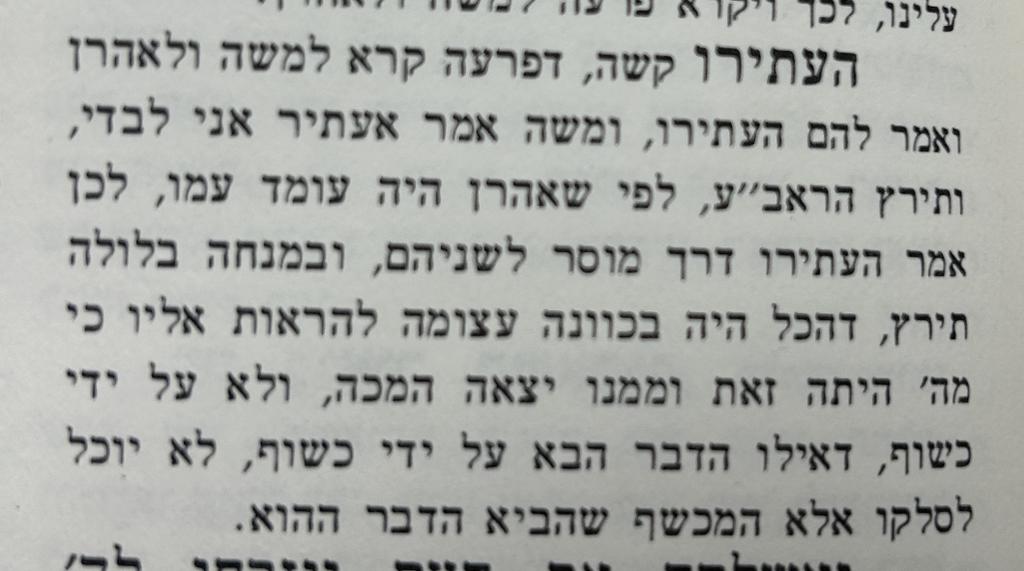
According to the Mincha Belula the reason Pharaoh included Aharon in his request to daven for the cessation of the plague was because he perceived it as an act of witchcraft. In the world of witchcraft, there was a rule: The one who started the magic is the only one who can stop it.
Moshe therefore insisted that he, the non-initiator be the one to make the Frogs disappear in order to dispel (no pun intended) the idea that the Frogs was magical hocus-pocus, but rather an act of Hashem.
This also dovetails nicely a Meshech Chochma, who suggests that the manner in which the Frog plague was removed also deviated from the typical rules of witchcraft.
"ויקרא פרעה... העתירו". על משה ואהרן מוסב לשון רבים, והנה תגובת משה "למתי אעתיר לך" (פסוק ה), באה בלשון יחיד. ובדומה לזה, פניית פרעה היא לשניהם והתגובה לעומת זאת באה על־ידי משה רבנו ע"ה בלבד, בלשון יחיד, גם במכות הערוב (להלן טז-כה), הברד (ט, יג-לה) והארבה (י, א-כ), דהיינו בארבע מתוך עשר המכות. (פ' וארא תשנ"ד)
שא נא חטאתי. דבר לשון יחיד למשה כי הוא הגדול ואלהים לפרעה ואמר העתירו לשניהם דרך מוסר אע"פ שהי' יודע שמשה הוא המעתיר כדכתיב
1. למתי אעתיר לך
2. והעתרתי אל ה':
והעתירו אל ה' אלהיכם, לשניהם, כי כן יאמר פרעה בכל פעם דרך מוסר, כי יודע פרעה כי משה הוא המעתיר, כי כן אמר לו:
1. למתי אעתיר לך (שמות ח׳:ח׳
2. והעתרתי אל ה' (שם כה),
3. אפרוש את כפי אל ה' (שם ט כט).
כי לא ידבר משה בזה לשון רבים, שלא יוציא שקר מפיו:
And entreat ye the Eternal your G-d. He addressed this appeal to both Moses and Aaron. He respectfully spoke thus every time [that he asked for prayer on his behalf]52Above, 8:4 (in the case of frogs), 8:24 (swarms of beasts), and 9:38 (hail). In each case, Pharaoh said ha’tiru (pray ye) in the plural. although Pharaoh knew that Moses alone was the one who prayed, for so he told him: Against what time shall I entreat for thee;53Above, 8:5. And I will entreat the Eternal;54Ibid., Verse 25. I will spread forth my hands to the Eternal.55Ibid., 9:29. Moses did not say it in the plural, [i.e., “we shall entreat”], so that he should not utter a falsehood, [but Pharaoh nevertheless addressed himself to both as an expression of respect].
(א) ויקרא פרעה למשה כו'. ראוי לשית לב על שינוי הלשונות... ועוד כי פרעה אמר העתירו ומשה אמר אעתיר שהוא על עצמו לבדו. (ד) ונבא אל הענין והוא כי היה מתיירא פרעה פן ימותו הצפרדעים בקרבו ובקרב גויות אנשיו ועמו ויסתכנו בעיפוש ההוא תוך גופם או יחלו חולי כבד מבאשם וצחנתן.
על כן אמר מה שאני נודר לשלח העם הוא בתנאי שיוסרו הצפרדעים מתוך גופי וגופי עמי ולא ימותו תוך הגוף.
ולבל יראה כשואל דברים הרבה, לא אמר ומעבדי אך כללם באו' ומעמי ועל זה הוצרך שני מעתירים באו' העתירו שצריך זכות רב ואמר שאם יעשה כן שיסיר הצפרדעים מהגופים עם שהשאר ימותו במקומו' ישלח את העם.
והשיב לו משה ואמר התפאר עלי לאמר הלא אמרת שלעשות רצונך זה צריך נעתיר שנינו – לא כן. אך התפאר עלי לבדי שתוכל להתפאר שאתה חשוב לפניו ית' כי בי לבדי שאעתיר יספיק לך לעשות רצונך. וזהו התפאר עלי כלומר עלי לבדי וז"א אח"כ למתי אעתיר לך ולא אמר נעתיר ומלבד האמור גם תתפאר שמהגופים ששאלת וגם מבתיך אכריתם:
(יז) להכרית הצפרדעים ממך ומבתך כו' כו' רק ביאור תשארנה. השאיר ביאר להורות כי אשר נהי' בדבר השם הוא מציאות מוחשי ובריאה ממשית קיימת לעולם כמו כל הנבראים בראשית הבריאה לא כן המתהווים מהחרטומים ע"י שדים וכשוף הוא אינו לעד רק דבר שאינו מתקיים לכן ישארו ביאר להראות ההבדל והנה החרטומים הביאו צפרדעים אבל לא בבתי פרעה ומה שהעלו ע"י שדים הי' בכחם להסירם אם כן להכרית מעם מצרים ומעבדיו אין זה התפארות כי גם החרטומים הסירו שלהם לכן אמר להכרית ממך ומבתיך שאותם לא היו יכולים החרטומים להסיר ודו"ק.