
Save "R' Yonah Yosef Ruttenberg - A Deeper Look
"
R' Yonah Yosef Ruttenberg - A Deeper Look
I wanted to take the time to express my feelings of gratitude towards you, especially in the wake of the tragic incident in Holland* and your family is involved in the efforts to keep Klal Yisrael safe, and it is befitting in your name being "Yonah," which makes reference to Klal Yisrael staying strong and surviving even in these troubled times Klal Yisrael finds themselves in, as we will see.
In this letter (which evolved into more of a scholastic essay), we'll explore the depth of the Yonah, the dove, and the depth and significance of Yosef HaTzaddik, as well as a place where the two intersect. Additional thoughts and peripheral topics were added by myself and Rav Shimon as we dove deeper into the topics.
Enjoy!
Section One: Yonah - The Prime Bird
וכענין שבירך יצחק אבינו את עשו "ועל חרבך תחיה" (כ"ז מ') כך אמר הב"ה "ומלאו את המים בימים" שימלאו כל האומות ברשעותם, ואין ימים אלא רשעים שנאמר והרשעים כים נגרש (ישעיה נ"ז כ').
"והעוף ירב בארץ", אעפ"כ יתקיימו ישראל בעולם שנקראו עוף שנאמר כנפי יונה נחפה בכסף** ואברותיה בּירקרק חרוץ׃ (תהלים ס"ח י"ד).
Isaac's blessing to Esau "By the sword you shall live" (Bereishis 27,40), was preceded by many years when Hashem created the world when Hashem said "And the waters shall fill the seas" (Bereishis 1,22).
"Waters" refers the the wicked people, who will fill up the world and cause chaos like the raging sea, as the passuk says in Isaiah, "But the wicked are like the troubled sea that cannot rest" (Isaiah 57,20).
However, the passuk concludes, "And let the birds increase on the earth,” (Bereishis 1,22) which means that even so, Klal Yisrael will remain in the world, as we find Klal Yisrael compared to a bird as the passuk says in Tehillim, "the wings of a dove sheathed in silver**, its pinions in fine gold."
*(The word "Holland" in Hebrew is spelled הולנד which has the same gematria as המן, "Haman", the villain of the Purim story who sought to destroy Klal Yisrael.) -totaling 55.
**The clause "כנפי יונה נחפה בכסף" (the wings of a dove sheathed in silver) is equal to the same gematria as "יונה ראטנברג" ("Yonah Ruttenberg")
Let's explore this Medrash more in depth.
Hashem's creation of the bird (עוף***) is fundamentally different than man and animal, because it has the unique ability to soar above the land and find refuge in the heights, something no other being can do.
*The Hebrew word for bird is עוף.
If you spell out the letters that spell out the word "עוף", you will find something interesting.
The word עוף is spelled:
עין
ויו
פה
If you take the highlighted letters and jumble them, it spells out the word "Yonah".
י ו ן(נ) ה
What is the significance of the dove in particular being alluded to in the word for "bird" which covers the entire bird species?
Perhaps the significance is, that the bird is the symbol of ascending in connection to Hashem. While gravity pulls most things down, the bird ascends into the sky, similar to the soul which ascends to the heights, despite the rest of the body being pulled towards earthly matters.
However, it is the dove, the Yonah, in particular that exhibits this quality in an exemplary way which earns it the privilege to be the "poster child" of the entire bird species and what it represents.
In Tehillim, David Hamelech writes about how he envies specifically the dove's ability to fly away from life's troubles by taking off into the sky:
(ז) וָאֹמַ֗ר מִֽי־יִתֶּן־לִ֣י אֵ֭בֶר כַּיּוֹנָ֗ה אָע֥וּפָה וְאֶשְׁכֹּֽנָה****׃ (ח) הִ֭נֵּה אַרְחִ֣יק נְדֹ֑ד אָלִ֖ין בַּמִּדְבָּ֣ר סֶֽלָה׃
(7) I said, “O that I had the wings of a dove! I would fly away and find rest;
(8) Surely, I would flee far off; I would lodge in the wilderness; selah.
**** The Hebrew terminology for "I will fly off and find rest", is transliterated as "A'ufa Eshkona", which is also the title of a song composed by Rabbi Yitzchak Abuchatzera.
In his younger years, he used to study Torah with his father. One day, he came late for his morning Seder.
His excuse?
He was busy writing a song.
Arriving at the place of study, his father asked him about his delay, to which the young Yitzchak, who was only 12 years old at the time, pulled out a paper and started singing the entire Piyut (poem/song).
His father, completely mesmerized by the words, exclaimed: “For this song, I accept your delay!"
The words of this special song are so filled with Kabala that they surpass the whole depth of the limmud (learning) we would have done this entire day!”
This song is nothing less than the now famous song of “A’Ufa Eshkona”. This song contains invaluable secrets of Kabbala about which his descendants took time to write pages and pages of commentaries.
https://crownheights.info/assets/2024/01/story-for-the-booklet-with-Aufa-Eshkona.pdf
In later years, a person recorded a modern tune for this song.
Unfortunately, the composer was killed by an Arab mob. Although his death was a horrible tragedy, the words of the song are themselves a comfort, keeping the Medrash in mind, that even when the wicked do evil to Klal Yisrael, we will survive.
In the current situation with the Arab world and Klal Yisrael, the song lyrics and the composer's cause of death are even more poignant.

Now that we've established what the significance of a bird's ability to fly up as a parallel to the ability for a person to "ascend" in one's spirituality and service of Hashem, let's go deeper into its specific applications.
Going back to the letters of the word "עוף" (bird) we find that it is made up the letters "ayin vav and peh." In Hebrew, the words for letters are themselves words. (A little confusing, I know :)
The word "ayin" is the word used for the letter ע and it also means "eye." The word "peh" is the word used for the letter ף and it also means "mouth." And the word vav is the word used for the letter ו and it also means "and."
👁👄👁
We see that the parallel of "ascending" in Avodas Hashem like a bird isn't just a general mindset and yearning to become closer to Hashem, but it is a more nuanced avoda (work), a concerted effort to makes correct use of one's eyes and mouth for the service of Hashem.
Only after he perfects those two organs, does he become a true "bird", replete with pinions of gold.
Section Two: The Eyes and Mouth - Perfecting The Traits of the Bird
Our eyes and mouths, both alluded to in the Hebrew word for "bird", are precious gifts that connect us deeply with both our Creator and our fellow human beings. When we use them mindfully and with pure intentions, they become powerful tools for bringing more light and goodness into the world.
Let's explore some meaningful ways we can elevate how we use these Divine gifts in our relationships with others and in our spiritual connection with Hashem.
Eyes:
As an introduction, we need to establish that while human beings have two physical eyes. These are called in Kabbala as the "einei habasar" (lit. eyes of flesh).
We also possess a "third" eye which is there in the spiritual sense, and it is called the "ein hasechel" (lit. the intellectual eye).
There is a fundamental difference in what the function each of these eyes has. The einei habasar sees things from the perspective of one's animalistic desires. The most basic principle that the einei habasar follows is keeping the beholder's eyes separate from its surroundings. When a person looks at another person purely with "einei habasar" they get a feeling of they are them and I am me and that the two are separate entities (and it is the beholder that matters and the object being seen as being a threat or something to bring them pleasure)
This is where opening up one's ein hasechel is crucial. The ein hasechel allows one to shift their perspective to act with judgement and decide based on his neshama and wisdom that there are people to which one should allow themselves to connect with, as well as people to stay away from.
This kabbalsitic concept actually mirrors the physical anatomy of the eyes. A person has two eyes, and both of them see from different perspectives, even ever so slightly, and can cause one to error and be misled.
It is the ein haseichel, also known as the ein hashelishis (the third eye) that sits above the eyes close to the forehead that acts as the chut hameshulash (the connecting knot) or the "control tower" with which one can make an educated decision whether to become one and connect to the person or object in question, or remain separate and disconnected from it.
This relationship between the ein haseichel and the einei habasar is alluded to in the mitzvah of Tefillen. (A mitzvah that is Between man and G-d)
(ח) וּקְשַׁרְתָּ֥ם לְא֖וֹת עַל־יָדֶ֑ךָ וְהָי֥וּ לְטֹטָפֹ֖ת בֵּ֥ין עֵינֶֽיךָ׃
(8) Bind them as a sign on your hand and let them serve as a symbol between your eyes. (on your forehead)
One of the ideas why the mitzvah of wearing Tefillen Shel Rosh (the head tefillen) is worded as to be placed "between the eyes" is to remind ourselves by wearing them to align our two eyes (einei habasar) to see with the spiritual third eye (ein haseichel), represented by the tefillen, and see the world in the way in Hashem designed for it to be utilized.
The idea of developing the ability to see the world they way Hashem does, is also alluded to in the passuk in Yeshaya:
(ח) ק֥וֹל צֹפַ֛יִךְ נָ֥שְׂאוּ ק֖וֹל
יַחְדָּ֣ו יְרַנֵּ֑נוּ
כִּ֣י עַ֤יִן בְּעַ֙יִן֙ יִרְא֔וּ בְּשׁ֥וּב יְהֹוָ֖ה צִיּֽוֹן׃
(8)Your lookouts raise their voices,
As one they shout for joy;
For eye to eye shall see G-d ’s return to Zion.
Based on the interpretation we are putting forth, the passuk is prophesizing that in the Time to Come, we will have a clear vision between our third Eye and Hashem's "Eye."

Building on the spiritual significance of our eyes and mouth, there's a profound parallel between our physical sight and our deeper spiritual vision.
Scientifically, the way in which one "sees" is by light entering the eye.
First the light enters through the outer part of the eye called the cornea, which helps focus the light to make the images sharp and clear, and then the light rays pass through an opening called the pupil.
The brain then picks up on the patterns of light being relayed to it, and interprets those patterns into images.
On a deeper level, however, there is another component to this process.
If we use our eyes to see inappropriate and bad things, and not using our vision according to the way Hashem commands, then although it seems like "light" is entering the eye, it is actually darkness that coming into our eyes.
However, when one uses his eyes in the orah manner, the light that comes through the eye is truly "light", it is the light of Hashem, and lets us true "light" of the world.
And this is perhaps the depth of the passuk that says:
(י) כִּֽי־עִ֭מְּךָ מְק֣וֹר חַיִּ֑ים בְּ֝אוֹרְךָ֗ נִרְאֶה־אֽוֹר׃
(10) With You is the fountain of life; by Your light do we see light.
Perhaps this is also a deeper understanding of what we say in davening:
A deeper understanding is, perhaps, that we are asking Hashem to let us see with the true "light" by allowing the light of the Torah enter our eyes and see the world with pure and G-dly vision.

Between man and his fellow, one can use his eyes to see people in a positive light.
(ט) אָמַר לָהֶם, צְאוּ וּרְאוּ אֵיזוֹהִי דֶרֶךְ יְשָׁרָה שֶׁיִּדְבַּק בָּהּ הָאָדָם. רַבִּי אֱלִיעֶזֶר אוֹמֵר, עַיִן טוֹבָה...
(9) He [Rabban Yohanan] said unto them: go forth and observe which is the right way to which a man should cleave? Rabbi Eliezer said, a good eye...
This also connects to the above idea of seeing the world in a G-dly way. Having an Ayin Tovah is about seeing people as being created in the image of Hashem and seeing them in a positive light, which is how Hashem views each and every one of us.*
*Perhaps, this is alluded to in the fact that the Mishna uses the singular term "a good eye", as the focus of the Mishna is about training one not to see the bad in other people, but instead to try to connect to that Third Singular Eye, the way in which Hashem sees the world.
Mouth:
Between man and G-d, one can use his mouth for Torah and Tefilla.
(ט) וְהָיָה֩ לְךָ֨ לְא֜וֹת עַל־יָדְךָ֗ וּלְזִכָּרוֹן֙ בֵּ֣ין עֵינֶ֔יךָ לְמַ֗עַן תִּהְיֶ֛ה תּוֹרַ֥ת יְהֹוָ֖ה בְּפִ֑יךָ...
(9) “And this shall serve you as a sign on your hand and as a reminder between your eyes in order that the Teaching of יהוה may be in your mouth...
Between man and his fellow, one can use his mouth to refrain from maligning his friend.
(יד) נְצֹ֣ר לְשׁוֹנְךָ֣ מֵרָ֑ע וּ֝שְׂפָתֶ֗יךָ מִדַּבֵּ֥ר מִרְמָֽה׃
(14) Guard your tongue from evil, your lips from deceitful speech.
In summary:
Eyes 👁👁
Mouth 👄
Man and G-dTefillenTefilla and Torah
Man and his fellowPositive Eye
Refraining from Lashon Hara

Section Three: Eyes and Mouth in the Festivals of the Year
Another place where we find allusions to the idea of the power of the mouth and the "Third Eye" is in the Three Festivals (The Shalosh Regalim) and in their respective mitzvos.
💡Let's begin with the holiday of Sukkos, and specifically on the mitzvah of the Four Species. The passuk says:
(מ) וּלְקַחְתֶּ֨ם לָכֶ֜ם בַּיּ֣וֹם הָרִאשׁ֗וֹן פְּרִ֨י עֵ֤ץ הָדָר֙ כַּפֹּ֣ת תְּמָרִ֔ים וַעֲנַ֥ף עֵץ־עָבֹ֖ת וְעַרְבֵי־נָ֑חַל וּשְׂמַחְתֶּ֗ם לִפְנֵ֛י יְהֹוָ֥ה אֱלֹהֵיכֶ֖ם שִׁבְעַ֥ת יָמִֽים׃
(40) On the first day you shall take the product of hadar trees, branches of palm trees, boughs of leafy trees, and willows of the brook, and you shall rejoice before your God יהוה seven days.
The Gemara in Sukka says that this refers to a Hadas, a myrtle branch.
תָּנוּ רַבָּנַן: ״עֲנַף עֵץ עָבוֹת״ — שֶׁעֲנָפָיו חוֹפִין אֶת עֵצוֹ. וְאֵי זֶה הוּא? הֱוֵי אוֹמֵר זֶה הֲדַס...
The Sages taught: It is written: “Boughs of a dense-leaved tree” (Leviticus 23:40); this is referring to a tree whose leaves obscure its tree. And which tree is that? You must say it is the myrtle tree...
Chazal say that the Hadas is symbolic of how a person should use his eyes in service of Hashem.
(יד) רַבִּי מָנֵי פָּתַח (תהלים לה, י): כָּל עַצְמֹתַי תֹּאמַרְנָה ה' מִי כָמוֹךָ, לֹא נֶאֱמַר פָּסוּק זֶה אֶלָּא בִּשְׁבִיל לוּלָב, הַשִּׁדְרָה שֶׁל לוּלָב דּוֹמָה לַשִּׁדְרָה שֶׁל אָדָם, וְהַהֲדַס דּוֹמֶה לָעַיִן, וַעֲרָבָה דּוֹמָה לַפֶּה, וְהָאֶתְרוֹג דּוֹמֶה לַלֵּב, אָמַר דָּוִד אֵין בְּכָל הָאֵיבָרִים גָּדוֹל מֵאֵלּוּ, שֶׁהֵן שְׁקוּלִין כְּנֶגֶד כָּל הַגּוּף, הֱוֵי: כָּל עַצְמוֹתַי תֹּאמַרְנָה.
(14) Rabbi Mani began: “All my bones will say: Lord, who is comparable to You” (Psalms 35:10) – this verse is stated only for the sake of the palm branch. The spine of the palm branch resembles the spine of a person, the myrtle resembles the eye, the willow resembles the mouth, and the citron resembles the heart. David said: There are none among the limbs greater than these, as they are equal in significance to the entire body. That is, “all my bones will say.”
Now, if the Hadas corresponds to ones eyes, then one would think it should be a species with two leaves? Why does the Hadas required to take have three leaves?
According to the depth of the proper way in which one needs to use his eyes in the service of Hashem, that one needs to connect his two eyes to the Eye of Hashem, it is no wonder why the makeup of the Hadas we take is to have three leaves!
Perhaps, we can see this symbolism in the way the Torah refers to the Hadas as well. The words the Torah uses is:
עֲנַף עֵץ עָבוֹת
If we spell out the letters that make up the clause, we get:
עֲנַף - "ayin nun peh" - "eye, fish, [and] mouth."
Perhaps the explanation is that the ayin and nun go together to spell "the eye of the fish" which is known in mystical terms as "eina pekicha", the ever-open eye, like that of a fish which never closes. The idea of this is that ones eyes are constantly open to see the world as Hashem would like him to.
The mouth reference I am not sure how to reconcile with the Medrash exactly, but as we know, the mouth and eye are connected as bring vital organs in connecting with Hashem.
עֵץ - "ayin tzedek", this spells out "a righteous eye", which corresponds to one using his eye for righteousness and not for evil.
I don't have a pshat yet for עָבוֹת
💡Another one of the mitzvos on Sukkos is sitting in the Sukka.
The word "Sukka" means a shelter, but it can also mean "to look", as we find in Parshas Noach:
(כט) וַיִּקַּ֨ח אַבְרָ֧ם וְנָח֛וֹר לָהֶ֖ם נָשִׁ֑ים שֵׁ֤ם אֵֽשֶׁת־אַבְרָם֙ שָׂרָ֔י וְשֵׁ֤ם אֵֽשֶׁת־נָחוֹר֙ מִלְכָּ֔ה בַּת־הָרָ֥ן אֲבִֽי־מִלְכָּ֖ה וַֽאֲבִ֥י יִסְכָּֽה׃
(29) Abram and Nahor took wives for themselves, the name of Abram’s wife being Sarai and that of Nahor’s wife Milcah, the daughter of Haran, the father of Milcah and the father of Yiska.
(א) יסכה. זוֹ שָׂרָה, עַל שֵׁם שֶׁסּוֹכָה בְּרוּחַ הַקֹּדֶשׁ...
(1) יסכה Yiska— This was Sarah; she was also named Yiska(from a root meaning “”to see”, “to look”) because she could see the future by holy inspiration...
This represents the power of the eye.
💡On the topic of holidays, this idea also is found in the holiday of Pesach. The word "Pesach" in Hebrew can be read as a compound word, "peh sach", the mouth speaks.
There is a famous teaching of Rabbi Levi Yitzchak of Berditchev which explains the meaning of the Passover holiday (Pesach). “Pesach” literally means peh-sach, “the mouth ( פה peh) talks (שח sach).” On Pesach, the mouth talks about the wonders and miracles of God. Pesach represents the antithesis of Pharaoh, who, as the Megaleh Amukos explains, signifies פה רע peh-ra, a “bad mouth.” Pharaoh was someone who denied God’s providence in every act of nature. Our mouths were not given to us to slander or denigrate others, but to speak of God’s greatness and wonders.
💡And the last of the Three Festivals is Shavuos, when we celebrate the giving of the Torah. The passuk says in regards to Matan Torah:
(טו) וְכׇל־הָעָם֩ רֹאִ֨ים אֶת־הַקּוֹלֹ֜ת וְאֶת־הַלַּפִּידִ֗ם וְאֵת֙ ק֣וֹל הַשֹּׁפָ֔ר וְאֶת־הָהָ֖ר עָשֵׁ֑ן וַיַּ֤רְא הָעָם֙ וַיָּנֻ֔עוּ וַיַּֽעַמְד֖וּ מֵֽרָחֹֽק׃
(15) All the people saw the sounds [of thunder and lightning], the blare of the horn and the mountain smoking; and when the people saw it, they fell back and stood at a distance.
(ב) ראים את הקולת. רוֹאִין אֶת הַנִּשְׁמָע, שֶׁאִי אֶפְשָׁר לִרְאוֹת בְּמָקוֹם אַחֵר:
(2) ראים את הקולת [THEY] SAW THE SOUNDS - they saw that which should be heard - something which is impossible to see on any other occasion.
We see that on Shavuos Klal Yisrael experienced both the spiritual powers that lay in the eye and the mouth together.
So in summary:
"Eyes and the Mouth" in the Three Festivals
Sukkos ----------------------------- Eyes
Pesach ------------------------------ Mouth
Shavuos ---------------------------- Eyes and Mouth

Section Four: Yosef HaTzadik - The Role Model of Perfecting of the Eyes and Mouth
Now that we have established the great importance of making sure our eyes and mouths are clean and pure in order to ascend like a Yonah in the service of Hashem, let us move on to study a person in the Torah who strove to perfect the use of these organs*, and how it created tremendous success and closeness to Hashem in his life.
This person, was none other than Yosef HaTzadik.

As mentioned in the explanation to the cover page, Yosef (as a continuation of Yaakov's unfinished mission) was on a mission to repair the Original Sin of Adam HaRishon, which was done primarily through the eyes and mouth.

As your name is also Yosef, (and Yosef has the same gematria as Yonah), let's investigate the life and actions of Yosef HaTzaddik.
Already from his teenage years, Yaakov Avinu perceived that Yosef had potential in his way of seeing the world with eyes of holiness and spiritual clarity. However, at his young age, he sometimes erred because of misunderstanding of the facts. For example, Yosef brought back evil reports about his brothers about them eating animals that weren't slaughtered correctly because he was unfamiliar with the methods they were using.
Yosef also had improvements to make in his sight in another regard. The passuk says that Yosef was a "lad," and Rashi explains that Yosef would display "childlike" behaviors, such as dressing up his hair.

(ב) והוא נער. שֶׁהָיָה עוֹשֶׂה מַעֲשֵׂה נַעֲרוּת, מְתַקֵּן בִּשְׂעָרוֹ, מְמַשְׁמֵשׁ בְּעֵינָיו, כְּדֵי שֶׁיִּהְיֶה נִרְאֶה יָפֶה:

(2) והוא נער AND HE, BEING A LAD — His actions were childish: he dressed his hair, he touched up his eyes so that he should appear good-looking (Genesis Rabbah 84:7)

This demonstrated that Yosef was interested in how others viewed him in ways that are immaterial to one's purpose. This was also something that Yosef would work to repair in himself.
However, to Yaakov, he perceived that Yosef had good intentions with what he saw, and therefore would send him to oversee his brothers. As the passuk says:
(יג) וַיֹּ֨אמֶר יִשְׂרָאֵ֜ל אֶל־יוֹסֵ֗ף הֲל֤וֹא אַחֶ֙יךָ֙ רֹעִ֣ים בִּשְׁכֶ֔ם לְכָ֖ה וְאֶשְׁלָחֲךָ֣ אֲלֵיהֶ֑ם וַיֹּ֥אמֶר ל֖וֹ הִנֵּֽנִי׃ (יד) וַיֹּ֣אמֶר ל֗וֹ לֶךְ־נָ֨א רְאֵ֜ה אֶת־שְׁל֤וֹם אַחֶ֙יךָ֙ וְאֶת־שְׁל֣וֹם הַצֹּ֔אן וַהֲשִׁבֵ֖נִי דָּבָ֑ר וַיִּשְׁלָחֵ֙הוּ֙ מֵעֵ֣מֶק חֶבְר֔וֹן וַיָּבֹ֖א שְׁכֶֽמָה׃
(13) Israel said to Joseph, “Your brothers are pasturing at Shechem. Come, I will send you to them.” He answered, “I am ready.” (14) And he said to him, “Go and see how your brothers are and how the flocks are faring, and bring me back word.” So he sent him from the valley of Hebron and he reached Shechem.
And in the power of his mouth - his speech, he was also lacking during his younger years. The passuk says that Yosef's brothers disliked him because he brought evil reports about them back to Yaakov, their father.
(ב) אֵ֣לֶּה ׀ תֹּלְד֣וֹת יַעֲקֹ֗ב יוֹסֵ֞ף בֶּן־שְׁבַֽע־עֶשְׂרֵ֤ה שָׁנָה֙ הָיָ֨ה רֹעֶ֤ה אֶת־אֶחָיו֙ בַּצֹּ֔אן וְה֣וּא נַ֗עַר אֶת־בְּנֵ֥י בִלְהָ֛ה וְאֶת־בְּנֵ֥י זִלְפָּ֖ה נְשֵׁ֣י אָבִ֑יו וַיָּבֵ֥א יוֹסֵ֛ף אֶת־דִּבָּתָ֥ם רָעָ֖ה אֶל־אֲבִיהֶֽם׃
(2) This, then, is the line of Jacob: At seventeen years of age, Joseph tended the flocks with his brothers, as a helper to the sons of his father’s wives Bilhah and Zilpah. And Joseph brought bad reports of them to their father.

(ד) את דבתם רעה. כָּל רָעָה שֶׁהָיָה רוֹאֶה בְאֶחָיו בְנֵי לֵאָה הָיָה מַגִּיד לְאָבִיו, שֶׁהָיוּ אוֹכְלִין אֵבֶר מִן הַחַי, וּמְזַלְזְלִין בִּבְנֵי הַשְּׁפָחוֹת לִקְרוֹתָן עֲבָדִים, וַחֲשׁוּדִים עַל הָעֲרָיוֹת

(4) את דבתם רעה THEIR EVIL REPORT — Whatever he saw wrong in his brothers, the sons of Leah, he told to his father: that they used to eat flesh cut off from a living animal, that they treated the sons of the handmaids with contempt, calling them slaves, and that they were suspected of living in an immoral manner.

Yaakov was cognizant of his shortcoming in his speech, and thought of a way to help him be more careful in his speech...by making Yosef a special tunic.
But how would a tunic help Yosef in his goal of perfecting his power of speech?
Let's begin by looking into the term the passuk uses for this "tunic."
The passuk calls this article of clothing by a very peculiar title, a "Kesones Pasim":

(ג) וְיִשְׂרָאֵ֗ל אָהַ֤ב אֶת־יוֹסֵף֙ מִכׇּל־בָּנָ֔יו כִּֽי־בֶן־זְקֻנִ֥ים ה֖וּא ל֑וֹ וְעָ֥שָׂה ל֖וֹ כְּתֹ֥נֶת פַּסִּֽים׃

(3) Now Israel loved Joseph best of all his sons—he was his “child of old age,” and he had made him an ornamented tunic.

The word "Pasim" is made of the root word פס, which is made up of the letters "peh" and "samech." Now, as we mentioned earlier in the essay, the words used for the letters of the Alef Beis are themselves words too. The word "peh" means "mouth" and the word "samech" means to assist.
According to this, Yaakov gave Yosef this tunic as a constant reminder to "assist" him in using his mouth correctly, and thereby help him in his ultimate mission to rectify the sin of Adam HaRishon.
Yosef was then sold to Mitzrayim and became a slave to Potiphar, and subsequently was thrown into jail over a scandal.
It was during those dark times of subjegation and vulnerability where he was given the potential to really rectify his power of sight, because if one can have a positive attitude and look after others when one naturally looks after themselves with disregard
for another, then they are fit to be given a position of power - such as kingship, where they could use their vision to make a greater impact.
Yosef demonstrated this trait in his interactions with the butler and the baker whom he noticed were despondent. (which would be a pivotal step in to how Yosef would actually end up becoming viceroy over Mitzrayim) The passuk says:
(ו) וַיָּבֹ֧א אֲלֵיהֶ֛ם יוֹסֵ֖ף בַּבֹּ֑קֶר וַיַּ֣רְא אֹתָ֔ם וְהִנָּ֖ם זֹעֲפִֽים׃
(6) When Joseph came to them in the morning, he saw that they were distraught.
Even after Yosef was eventually lifted from the dungeons of Egypt and was appointed viceroy, he stayed true to his mission of maintaining his positive vision and working on rectifying his mouth, to speak words of Torah and faith in Hashem. Chazal say:

(א) כי ה' אתו. שֵׁם שָׁמַיִם שָׁגוּר בְּפִיו:

(1) כי ה‘ אתו THAT THE LORD WAS WITH HIM — the name of God was a familiar word in his mouth (Midrash Tanchuma, Vayeshev 8).

And as time went on, and Yosef eventually revealed himself to his brothers, part of his revelation was his tikkun (repair) in these two areas of the power of the eye and the mouth. Throughout his years in Mitzrayim he had perfected his "skill" of having the name of Hashem constantly in his mouth and being careful to guard his eyes from evil and immoral things.
For this reason Yosef refers specifically to his eyes and mouth when he makes his final reveal. The passuk says:

(יב) וְהִנֵּ֤ה עֵֽינֵיכֶם֙ רֹא֔וֹת וְעֵינֵ֖י אָחִ֣י בִנְיָמִ֑ין כִּי־פִ֖י הַֽמְדַבֵּ֥ר אֲלֵיכֶֽם׃

(12) Behold your eyes see, and my brother Benjamin's eyes see, that it is indeed my mouth that is speaking to you.


It's important to stress that Yosef's acquired (and perhaps from some mystical angle, innately endowed into his neshama) ability to see the positive in others wasn't a juvenile and naive approach of trying to see he world with "rose colored lenses," it was rooted in his connection to Hashem and thus seeing the world in a G-dly way.
In fact, when one tries to act with kindness without the guidance and moral principles of the Torah, ones kindness can be corrupted egregiously. We find an example of this in regards to the arayos, the prohibited marital relationships in the Torah.
The passuk says:
(יז) וְאִ֣ישׁ אֲשֶׁר־יִקַּ֣ח אֶת־אֲחֹת֡וֹ בַּת־אָבִ֣יו א֣וֹ בַת־אִ֠מּ֠וֹ וְרָאָ֨ה אֶת־עֶרְוָתָ֜הּ וְהִֽיא־תִרְאֶ֤ה אֶת־עֶרְוָתוֹ֙ חֶ֣סֶד ה֔וּא וְנִ֨כְרְת֔וּ לְעֵינֵ֖י בְּנֵ֣י עַמָּ֑ם עֶרְוַ֧ת אֲחֹת֛וֹ גִּלָּ֖ה עֲוֺנ֥וֹ יִשָּֽׂא׃
(17) If a man takes his sister [into his household as a wife], the daughter of either his father or his mother, so that he sees her nakedness and she sees his nakedness, it is a disgrace (lit. it is a kindness) they shall be cut off in the sight of their kinsfolk. He has uncovered the nakedness of his sister, he shall bear the guilt.
The Torah calls one who marries his sister a kindness. Why is that a kindness? That is abominable!
The answer is, that with unbridled morals, one can come to see living with ones sister as the ultimate kindness to ones sister. The Torah is covertly warning us, that without the Torah's instruction, one can come to this kind of egregious behavior all in the name of "kindness."
Rabbi Rudinsky spoke on this topic:
https://ohr-reuven.app.link/loO5xe0raPb

Yosef's life of protecting his eyes and using his eyes for the positive was reflected in Yaakov's end of life blessing to him. The passuk says:
(כב) בֵּ֤ן פֹּרָת֙ יוֹסֵ֔ף בֵּ֥ן פֹּרָ֖ת עֲלֵי־עָ֑יִן...
(22) A fruitful son is Yosef, a fruitful son by a spring (ayin)...
Chazal say that the word "ayin" can also be homiletically rendered as "eye", and extract another intention of Yaakov's blessing to Yosef.
...אֲנָא מִזַּרְעָא דְּיוֹסֵף קָא אָתֵינָא, דְּלָא שָׁלְטָא בֵּיהּ עֵינָא בִּישָׁא, דִּכְתִיב ״בֵּן פּוֹרָת יוֹסֵף בֵּן פּוֹרָת עֲלֵי עָיִן״, וְאָמַר רַבִּי אֲבָהוּ: אַל תִּקְרֵי ״עֲלֵי עָיִן״, אֶלָּא ״עוֹלֵי עָיִן״.
...He said to them: I descend from the seed of Joseph over whom the evil eye has no dominion, as it is written: “Joseph is a bountiful vine, a bountiful vine on a spring [alei ayin]” (Genesis 49:22). “Ayin” can mean both “spring” and “eye.” And Rabbi Abbahu said a homiletic interpretation: Do not read it alei ayin, rather olei ayin, above the eye; they transcend the influence of the evil eye.
In other words, the passuk can be rendered to read "above the eye"in that just like Yosef was scrupulous not to look at things that were inappropriate and raised himself in his service of Hashem, Hashem therefore raised him from being suceptible to being harmed from the evil eye.
On the surface, this protection from the evil eye is understood as a "reward" for him being scrupulous with his eyes. However, it is even more simple, but profound than that.
In the scientific realm, when one wants to get a blood transfusion, they need to make sure their blood types are compatible. Blood bank specialists determine blood types based on whether there are particular antigens on your red blood cells. An antigen is a substance that can make your body’s immune system react.
Your blood type is compatible with someone else’s if your immune system recognizes the antigens in donated blood as belonging.
So too, in terms of spirituality, one can only inspire or "make contagious" that which the other person has too.
Here, as it relates to the eyes, since Yosef so perfected his eyes to be an "ayin tova", a good eye, (i.e. seeing the positive in people) the "ayin hara", the evil eye, could not take hold of him, and therefore he, and his decendents who follow in his ways, are also not suceptible to the ayin hara.
The Book of Genesis ends with Yosef's death, and Yosef's legacy of the eye and mouth is brought to a end - for now...
In truth, even before Yosef's death, at the time of Yaakov's death, the "eyes" of Klal Yisrael began to "close." Chazal say:

(א) וַיְחִי יַעֲקֹב בְּאֶרֶץ מִצְרַיִם... (בראשית מז, כח), לָמָּה פָּרָשָׁה זוֹ סְתוּמָה מִכָּל הַפָּרָשִׁיּוֹת שֶׁל תּוֹרָה, אֶלָּא כֵּיוָן שֶׁנִּפְטַר אָבִינוּ יַעֲקֹב הִתְחִילָה שִׁעְבּוּד מִצְרַיִם עַל יִשְׂרָאֵל.

(1) “Jacob lived in the land of Egypt...(Genesis 47:28).
“Jacob lived in the land of Egypt” – why is this portion more closed than any of the Torah portions?1Typically between Torah portions there is a nine-letter long space in the Torah scroll. Leading into the Torah portion of Vayḥi, which begins with this verse, there is merely a one letter space. It is because once our patriarch Jacob died, the enslavement in Egypt began.

Rashi brings this Medrash of Chazal but adds imagery:

(א) ויחי יעקב. לָמָּה פָּרָשָׁה זוֹ סְתוּמָה? לְפִי שֶׁכֵּיוָן שֶׁנִּפְטַר יַעֲקֹב אָבִינוּ נִסְתְּמוּ עֵינֵיהֶם וְלִבָּם שֶׁל יִשְׂרָאֵל מִצָּרַת הַשִּׁעְבּוּד, שֶׁהִתְחִילוּ לְשַׁעְבְּדָם

(1) ויחי יעקב AND JACOB LIVED — Why is this section (Sidra) totally closed? Because, comprising as it does an account of the death of Jacob, as soon as our father Jacob departed, the eyes and hearts of Israel were closed because of the misery of the bondage which they then began to impose upon them...

Now, there is a big difference between a closed eye and a closed mouth. With a closed eye, the vision is still active, but there is an external blockage that obstructs, or "covers over" ones eyes from seeing meaningful objects.
However, with regards to a closed mouth, it isn't so much that there are words that are coming out but one is stopping them by keeping his mouth closed, rather there is another component of wanting to speak which also obstructs speech from emerging.
Perhaps, even while Klal Yisrael were in the Galus Mitzrayim, they were still on the level of "eina pekicha" having that open eye to see Hashem's ways, but because of the backbreaking labor and not having a minute to "breathe" their eyes were "covered over" from connecting actively to Hashem, but had the suffering ceased they would have been close to Hashem in actuality.*
However, the power of the mouth was something that Klal Yisrael then still struggled with, and they had not yet come to perfect it. The passuk indeed attests to their lacking of their usage of the mouth for positivity and G-dliness.
(יד) וַ֠יֹּ֠אמֶר מִ֣י שָֽׂמְךָ֞ לְאִ֨ישׁ שַׂ֤ר וְשֹׁפֵט֙ עָלֵ֔ינוּ הַלְהׇרְגֵ֙נִי֙ אַתָּ֣ה אֹמֵ֔ר כַּאֲשֶׁ֥ר הָרַ֖גְתָּ אֶת־הַמִּצְרִ֑י וַיִּירָ֤א מֹשֶׁה֙ וַיֹּאמַ֔ר אָכֵ֖ן נוֹדַ֥ע הַדָּבָֽר׃
(14) He retorted, “Who made you chief and ruler over us? Do you mean to kill me as you killed the Egyptian?” Moses was frightened, and thought: Then the matter is known!

(ד) אכן נודע הדבר. כְּמַשְׁמָעוֹ. וּמִדְרָשׁוֹ, נוֹדַע לִי הַדָּבָר שֶׁהָיִיתִי תָּמֵהַּ עָלָיו, מֶה חָטְאוּ יִשְׂרָאֵל מִכָּל שִׁבְעִים אֻמּוֹת לִהְיוֹת נִרְדִּים בַּעֲבוֹדַת פֶּרֶךְ, אֲבָל רוֹאֶה אֲנִי שֶׁהֵם רְאוּיִים לְכָךְ (שמות רבה א'):

(4) אכן נדע הדבר SURELY THE THING IS KNOWN — Explain it in its literal sense: the fact that I have killed the Egyptian is known. A Midrashic explanation is: now there is known to me that matter about which I have been puzzled — how has Israel sinned more than all the seventy nations, that they should be oppressed by this crushing servitude? But now I see that they deserve this (Exodus Rabbah 1:30).

הַלְהָרְגֵנִי אַתָּה אֹמֵר, אַתָּה מְבַקֵּשׁ לֹא נֶאֱמַר, אֶלָּא אַתָּה אֹמֵר, מִכָּאן אַתָּה לָמֵד שֶׁשֵּׁם הַמְפֹרָשׁ הִזְכִּיר עַל הַמִּצְרִי וַהֲרָגוֹ. כֵּיוָן שֶׁשָּׁמַע כֵּן נִתְיָרֵא מִלָּשׁוֹן הָרָע, וַיֹּאמַר אָכֵן נוֹדַע הַדָּבָר, רַבִּי יְהוּדָה בַּר רַבִּי שָׁלוֹם בְּשֵׁם רַבִּי חֲנִינָא הַגָּדוֹל, וְרַבּוֹתֵינוּ בְּשֵׁם רַבִּי אֲלֶכְּסַנְדְּרִי אָמְרוּ, הָיָה משֶׁה מְהַרְהֵר בְּלִבּוֹ וְאוֹמֵר מֶה חָטְאוּ יִשְׂרָאֵל שֶׁנִּשְׁתַּעְבְּדוּ מִכָּל הָאֻמּוֹת, כֵּיוָן שֶׁשָּׁמַע דְּבָרָיו אָמַר לָשׁוֹן הָרָע יֵשׁ בֵּינֵיהֶן הֵיאַךְ יִהְיוּ רְאוּיִין לַגְּאֻלָּה, לְכָךְ אָמַר: אָכֵן נוֹדַע הַדָּבָר, עַתָּה יָדַעְתִּי בְּאֵיזֶה דָבָר הֵם מִשְׁתַּעְבְּדִים.

“Do you propose [omer] to kill me?” Do you seek to kill me is not stated, but rather do you omer [literally, say]. From here you learn that he had invoked the ineffable name against the Egyptian, and killed him. When he heard this,65When Moses heard the response of the Hebrew man he had rebuked. he feared slander and he said: “Indeed, the matter is known.” Rabbi Yehuda bar Rabbi Shalom [said] in the name of Rabbi Ḥanina the Great, and our Rabbis said in the name of Rabbi Alexandri: Moshe was pondering in his heart and saying: What sin did Israel commit that caused them, more than all the nations, to be enslaved? When he heard his response, he said: ‘There is slander in their midst, how can they be deserving of redemption?’ Therefore he said: “Indeed the matter is known” – now I know the reason for their enslavement.


This difference between the eyes and mouth can also be the deeper explanation of teaching of Chazal in the Talmud. The Gemara says:

וְאָמַר רַבִּי אֶלְעָזָר: מִיּוֹם שֶׁחָרַב בֵּית הַמִּקְדָּשׁ נִנְעֲלוּ שַׁעֲרֵי תְּפִלָּה, שֶׁנֶּאֱמַר: ״גַּם כִּי אֶזְעַק וַאֲשַׁוֵּעַ שָׂתַם תְּפִלָּתִי״. וְאַף עַל פִּי שֶׁשַּׁעֲרֵי תְפִילָּה נִנְעֲלוּ, שַׁעֲרֵי דִמְעָה לֹא נִנְעֲלוּ, שֶׁנֶּאֱמַר: ״שִׁמְעָה תְפִלָּתִי ה׳ וְשַׁוְעָתִי הַאֲזִינָה אֶל דִּמְעָתִי אַל תֶּחֱרַשׁ״.

Rabbi Elazar also said: Since the day the Temple was destroyed the gates of prayer were locked and prayer is not accepted as it once was, as it is said in lamentation of the Temple’s destruction: “Though I plead and call out, He shuts out my prayer” (Lamentations 3:8). Yet, despite the fact that the gates of prayer were locked with the destruction of the Temple, the gates of tears were not locked, and one who cries before God may rest assured that his prayers will be answered, as it is stated: “Hear my prayer, Lord, and give ear to my pleading, keep not silence at my tears” (Psalms 39:13).

Tears are related to the eyes, which as we mentioned are always "open" (eina pekicha), and are therefore if one cries, he is tapping into that already "open" source to connect to Hashem and have his prayers answered. However, just engaging in prayer by the mouth cannot necessarily create as "immediate" results, since the mouth needs to be perfected as being a proper bridge between the body and the soul, and if it is corrupted through forbidden talk, it may make his tefillos unworthy to be accepted by Hashem, and only with further repair of one's mouth can his future prayers be accepted.
This brings us to another fundamental difference between sight and speech. Sight is represented by the eye which is the closest organ on the face to the neshama (soul) which lies in the brain. The power of sight to the processing of the brain is very closely related, they are both "cerebral" and attached to the "upper realms" of thought and philosophical function.
But the mouth's function is different, the mouth's function is like a bridge that connects the body to the soul, to connect ones physicality to the spirituality. The power of the mouth accomplishes a supernatural purpose, one that only man can do; animals stay purely physical and angels stay purely spiritual.
For this reason when Hashem created man, he stressed that it was his power of speech that set him apart from the animal kingdom. The passuk says:

(ז) וַיִּ֩יצֶר֩ יְהֹוָ֨ה אֱלֹהִ֜ים אֶת־הָֽאָדָ֗ם עָפָר֙ מִן־הָ֣אֲדָמָ֔ה וַיִּפַּ֥ח בְּאַפָּ֖יו נִשְׁמַ֣ת חַיִּ֑ים וַיְהִ֥י הָֽאָדָ֖ם לְנֶ֥פֶשׁ חַיָּֽה׃

(7) Hashem formed the Human, blowing into his nostrils the breath of life: and so the Human became a living being.

(ז) וּבְרָא יְיָ אֱלֹהִים יָת אָדָם עַפְרָא מִן אַדְמְתָא וּנְפַח בְּאַפּוֹהִי נִשְׁמְתָא דְחַיֵּי וַהֲוַת בְּאָדָם לְרוּחַ מְמַלְלָא:

(7) Hashem then formed the man, dust from the ground, and He blew into his nostrils the breath of life. And so man became a speaking soul.

This difference between the function and fundamental makeup of the eyes and mouth also expresses itself in another way. Shlomo Carlebach once observed that a kiss between two people is better when their eyes are closed. The reason, he said, is because when one has their eyes open they are cerebrally and conciously noticing that they are separate people. But when both of them close their eyes, they are not seeing that separation, and are able to connect in a deeper way. (See introduction to Part 2 about the difference between einei habasar and ein haseichel where we explained the fundamentals behind the concept)
Perhaps for this reason the word for "ayin" eye, is also the word for the letter in the Alef Beis which has the Gematria of 70. The number 70, which is from the root number 7, represents the natural course of things. Sight, as we mentioned is not a supernatural phenomenon in term of its actual function.
However the word for mouth, peh is also the word used for the letter in the Alef Beis which has the gematria of 80, which has the root of 8, which represents the supernatural. As we mentioned, the power of speech is a supernatural phenomenon, and perhaps it is for this reason the word for "mouth" itself is perfectly summed up as an "80" - the ultimate expression of supernatural experience.

Section Five: Yosef's Perfection of the Eyes and Mouth V.S. Esav's Corruption of the Eyes and Mouth
There is another explanation as to how Yosef merited to be saved form ayin hara, and it comes from a Medrash, initally brought by Rashi in Parshas Vayishlach:
(א) נגש יוסף ורחל. בְּכֻלָּן הָאִמָּהוֹת נִגָּשׁוֹת לִפְנֵי הַבָּנִים, אֲבָל בְּרָחֵל יוֹסֵף נִגַּשׁ לְפָנֶיהָ, אָמַר אִמִּי יְפַת תֹּאַר, שֶׁמָּא יִתְלֶה בָהּ עֵינָיו אוֹתוֹ רָשָׁע, אֶעֱמֹד כְּנֶגְדָהּ וַאֲעַכְּבֶנּוּ מִלְּהִסְתַּכֵּל בָּהּ; מִכָּאן זָכָה יוֹסֵף לְבִרְכַּת עֲלֵי עַיִן:
(1) נגש יוסף ורחל JOSEPH AND RACHEL STEPPED NEAR — In the case of all the others the mothers approached before the children, but in the case of Rachel, Joseph came in front of her. He said: “My mother is a beautiful woman: for fear that this wicked man will set his eyes on her I will stand in front of her and prevent him from gazing at her ” As a reward for this Joseph merited the blessing associated with the words עלי עין "with the eye.” (Genesis Rabbah 78:10).
The Medrash inside reads:
בְּשָׁעָה שֶׁבָּא עֵשָׂו לִקְרַאת יַעֲקֹב, בְּכֻלָּן קָדְמוּ הָאִמָּהוֹת לָלֶכֶת לִפְנֵי בְּנֵיהֶם לְהִשְׁתַּחֲווֹת, וּבְרָחֵל כְּתִיב נִגַּשׁ יוֹסֵף וְרָחֵל וַיִּשְׁתַּחֲווּ, אָמַר יוֹסֵף רָשָׁע הַזֶּה עֵינוֹ רָמָה, שֶׁמָּא יִתֵּן עֵינָיו בְּאִמִּי, יָצָא לְפָנֶיהָ וְשִׁרְבֵּב קוֹמָתוֹ לְכַסּוֹתָהּ, וְהוּא שֶׁבֵּרְכוֹ אָבִיו בֵּן פֹּרָת – הִגְדַּלְתָּ עַצְמְךָ יוֹסֵף עֲלֵי עַיִן שֶׁל עֵשָׂו, לְפִיכָךְ זָכִיתָ לִגְדֻלָּה:
When Esau came to meet Jacob all the other matriarchs walked in front of their children to prostrate themselves but of Rachel it states (33:7) “[and afterwards] came Joseph near and Rachel (i.e. Joseph before Rachel) and they bowed down”. Joseph said, “This wicked man has a haughty look (is bold and impudent) he may set his fancy upon my mother”. He therefore stepped in front of her, drawing himself up to his full height, in order to hide her from Esau’s eyes. It was in reference to this that his father when blessing him called him a בן פורת, a son who grew in size: You, Joseph, stretched yourself to a great height to protect your mother against Esau’s glance, therefore you deserved to become great. (This has reference to the distinguished position he attained in Egypt.)
(י) וַתִּגַּשְׁן הַשְּׁפָחוֹת הֵנָּה וְיַלְדֵיהֶן וַתִּשְׁתַּחֲוֶין, וַתִּגַּשׁ גַּם לֵאָה וִילָדֶיהָ וגו'.
בְּיוֹסֵף כְּתִיב (בראשית לג, ז): וְאַחַר נִגַּשׁ יוֹסֵף וְרָחֵל וַיִּשְׁתַּחֲווּ."
אֶלָּא אָמַר יוֹסֵף, הָרָשָׁע הַזֶּה עֵינוֹ רָמָה, שֶׁלֹא יִתְלֶה עֵינָיו וְיַבִּיט אֶת אִמִּי, וְגָבְהָה קוֹמָתוֹ וְכִסָּה אוֹתָהּ, הוּא דִּכְתִיב בֵּיהּ (בראשית מט, כב): בֵּן פֹּרָת יוֹסֵף בֵּן פֹּרָת עֲלֵי עָיִן, בֵּן פֹּרָת רְבִיָּת עֲלֵי עָיִן.
(10) “The maidservants approached, they and their children, and they prostrated themselves, Leah too, and her children, approached, and prostrated themselves; .
[But] Regarding Joseph it is written: “And then Joseph and Rachel approached, and prostrated themselves.”
[Rather,] Joseph said, this wicked one has a covetous [lit. "high"] eye. Let him not direct his eyes and look at my mother. He stood tall and obscured her. That is what is written: “Joseph is a fruitful tree [ben porat], a fruitful tree alongside a spring [alei ayin]” (Genesis 49:22) – Joseph, you grew like a fruitful tree to block an eye [alei ayin].21To obscure Rachel from Esau’s eye.
Esav also had a tremendous influence on the eyes (and mouth as we will see later), and because of each of their mystical connections to the eye and mouth, fact Chazal say that Yosef was the "force to be reckoned with" against Esav.
By Yosef blocking Esav's "eye attack", Yosef was elevating the spiritual strength of the eye, against Esav's denigration of the spritual strength of the eye.
(א) וישב יעקב וגו'. דָּ"אַ וישב יעקב, הַפִּשְׁתָּנִי הַזֶּה נִכְנְסוּ גְמַלָּיו טְעוּנִים פִּשְׁתָּן, הַפֶּחָמִי תָמַהּ אָנָה יִכָּנֵס כָּל הַפִּשְׁתָּן הַזֶּה? הָיָה פִּקֵּחַ אֶחָד מֵשִׁיב לוֹ נִצּוֹץ אֶחָד יוֹצֵא מִמַּפּוּחַ שֶׁלְּךָ שֶׁשּׂוֹרֵף אֶת כֻּלּוֹ, כָּךְ יַעֲקֹב רָאָה אֶת כָּל הָאַלּוּפִים הַכְּתוּבִים לְמַעְלָה, תָּמַהּ וְאָמַר מִי יָכוֹל לִכְבֹּשׁ אֶת כֻּלָּן? מַה כְּתִיב לְמַטָּה, אֵלֶּה תּוֹלְדוֹת יַעֲקֹב - יוֹסֵף, דִּכְתִיב וְהָיָה בֵית יַעֲקֹב אֵשׁ וּבֵית יוֹסֵף לֶהָבָה וּבֵית עֵשָׂו לְקַשׁ (עובדיה א') – נִצּוֹץ יוֹצֵא מִיּוֹסֵף שֶׁמְּכַלֶּה וְשׂוֹרֵף אֶת כֻּלָּם:
(1) וישב יעקב AND JACOB ABODE — Another explanation of וישב יעקב AND JACOB ABODE: The camels of a flax dealer once came into a city laden with flax. A blacksmith asked in wonder where all that flax could be stored, and a clever fellow answered him, “A single spark caused by your bellows can burn up all of it.” “So, too, when Jacob saw (heard of) all these chiefs whose names are written above he said wonderingly, “Who can conquer all these?” What is written after the names of these chieftains? — and in this may be found the reply to Jacob’s question: These are the generations of Jacob — Joseph. For it is written (Obadiah 1:18) “And the house of Jacob shall be a fire and the house of Joseph a flame, and the house of Esau, for stubble: one spark issuing from Joseph will burn up all of these (descendants of Esau) (Genesis Rabbah 84:5). The passage beginning “Another explanation” is found in an old Rashi text.
One of the reasons why Yosef filled that role was because both Yosef and Esav went through similar life situations, and Yosef proved that there is a way to overcome ones base desires and hatred, thus "disproving" and negating any claim Esav would have to justify his actions, as the Medrash says:
יוֹסֵף כְּנֶגֶד מַלְכוּת אֱדוֹם, זֶה בַּעַל קַרְנַיִם וְזֶה בַּעַל קַרְנַיִם. זֶה בַּעַל קַרְנַיִם (דברים לג, יז): בְּכוֹר שׁוֹרוֹ הָדָר לוֹ. וְזֶה בַּעַל קַרְנַיִם (דניאל ז, כ): וְעַל קַרְנַיָּא עֲשַׂר דִּי בְרֵאשַׁהּ. זֶה פֵּרַשׁ מִן הָעֶרְוָה וְזֶה נִדְבַּק בָּעֶרְוָה. זֶה חָס עַל כְּבוֹד אָבִיו, וְזֶה בִּזָּה עַל כְּבוֹד אָבִיו. זֶה כְּתִיב בּוֹ (בראשית מב, יח): אֶת הָאֱלֹהִים אֲנִי יָרֵא, וְזֶה כְּתִיב בּוֹ (דברים כה, יח): וְלֹא יָרֵא אֱלֹהִים. בְּיַד מִי מַלְכוּת נוֹפֶלֶת, בְּיַד מְשׁוּחַ מִלְחָמָה שֶׁהוּא בָּא מִשֶּׁל יוֹסֵף. רַבִּי פִּינְחָס בְּשֵׁם רַבִּי שְׁמוּאֵל בַּר נַחְמָן מָסֹרֶת הוּא שֶׁאֵין עֵשָׂו נוֹפֵל אֶלָּא בְּיַד בָּנֶיהָ שֶׁל רָחֵל, הֲדָא הוּא דִכְתִיב (ירמיה מט, כ): אִם לוֹא יִסְחָבוּם צְעִירֵי הַצֹּאן, וְלָמָּה הוּא קוֹרֵא אוֹתָן צְעִירֵי הַצֹּאן, שֶׁהֵן צְעִירֵיהֶן שֶׁל שְׁבָטִים.
Joseph opposite the kingdom of Edom – this one has horns, and that one has horns. This one has horns – “the firstborn bull is his majesty” (Deuteronomy 33:17); and that one has horns – “and concerning the ten horns that were on its head” (Daniel 7:20). This one forsook licentiousness, and that one cleaves to licentiousness. This one was scrupulous regarding his father’s honor, and that one demeaned his father’s honor.14Joseph heeded his father and went to check on his brothers even though he knew they hated him (Genesis 37:13–14). The nation of Edom descends from Esau, who said: “The days of mourning for my father will approach, and I will kill my brother Jacob” (Genesis 27:41). Thus, Esau was looking forward to his father dying so that he could kill Jacob. Of this one it is stated: “I fear God” (Genesis 42:18); of that one it is stated: “And he did not fear God” (Deuteronomy 25:18).15This is stated in reference to Amalek, who descended from Esau. Into whose hands will the kingdom [of Edom] fall? Into the hands of the one anointed for war, who comes from Joseph.16The messiah, son of Joseph. Rabbi Pinḥas in the name of Rabbi Shmuel bar Naḥman: There is a tradition that Esau will fall only into the hands of Rachel’s descendants. That is what is written: “[Therefore, hear the schemes of the Lord that He has devised against Edom…] will the young of the flock not drag them?” (Jeremiah 49:20). Why does he call them the young of the flock? Because they are the youngest of the tribes.
💡The stark difference between Esav and Yosef also plays out in the professions they had. Yosef was a shephard (like his mother Rachel and his father Yaakov) and Esav was a hunter.
A shephard looks at his animals and looks for the strengths in each animal and how it can cultivate each one into a healthy sheep to be able to keep up with the herd.
A hunter looks for the weaknesses in each animal and how he can exploit that weakness, thereby trapping it.
💡Another place where Yosef and Esav's attitudes diverge dramatically between positive, "ayin tovah" and negative, "ayin hara" is how they reacted to their being "targeted" by their brothers.
Even after having gone through torment by his brothers and even being sold by them, when Yosef reveals himself to them, he is gracious towards them, and doesn't harbor ill-will against them - he saw that the situation was actually for the best and saw it in a positive light.
On the other hand, after Yaakov stole the bracha from Esav, Esav was prepared to kill Yaakov, and would not see how the situation could be looked at in a positive light.*
The Toldos Yitzchak (end of Toldos) says that this is one of the reasons why specifically Yosef was destined to to defeat Esav, as mentioned in the Midrashim above, because when Esav will be brought to judgement in the end of days, the Heavenly Tribunal will ask him, "How come you did evil to your brother Yaakov?"
In regards to the other brothers, Esav would have been able to argue "I'm not the only one who acted like this, even the Yaakov's descendents were vengeful towards their brother."
But Yosef will be the "proof" against Esav, because not only did he not take revenge on his brothers' actions towards him, but he even did good to them, as the passuk attests:
(יב) וַיְכַלְכֵּ֤ל יוֹסֵף֙ אֶת־אָבִ֣יו וְאֶת־אֶחָ֔יו וְאֵ֖ת כׇּל־בֵּ֣ית אָבִ֑יו לֶ֖חֶם לְפִ֥י הַטָּֽף׃
(12) Joseph sustained his father, and his brothers, and all his father’s household with bread, down to the little ones.
💡Essentially, the difference as to whether to see positively or negatively comes down to a deeper idea of ones overall attitude towards his lot in life.
Yosef was satisfied with his lot and believed that everything that transpired to him was for the good and he always had evertyhing he needed at each point in his life, no matter how hard it may have been.
This is a middah (trait) he acquired from Yaakov, who said:
(יא) קַח־נָ֤א אֶת־בִּרְכָתִי֙ אֲשֶׁ֣ר הֻבָ֣את לָ֔ךְ כִּֽי־חַנַּ֥נִי אֱלֹהִ֖ים וְכִ֣י יֶשׁ־לִי־כֹ֑ל וַיִּפְצַר־בּ֖וֹ וַיִּקָּֽח׃
(11) Please accept my present which has been brought to you, for God has favored me and I have everything [I need].” And when he urged him, he accepted.
Although Yosef went through several traumatic experiences, like being thrown into a pit and sold down to Egypt by his own brothers and being jailed for decades in Egypt, he didn't complain about his lot, he embodied the idea that "everything is for the best.
כִּי הָא דְּרַבִּי עֲקִיבָא... אֲמַר: ״כׇּל דְּעָבֵיד רַחֲמָנָא — לְטָב״.
He [Rabbi Akiva] said: Everything that God does, He does for the best.
After Yosef reveals himself to the brothers, he is genuinely forgiving and says that having been sold to Egypt was all part of Hashem's master plan - for the good.
(כ) וְאַתֶּ֕ם חֲשַׁבְתֶּ֥ם עָלַ֖י רָעָ֑ה אֱלֹהִים֙ חֲשָׁבָ֣הּ לְטֹבָ֔ה לְמַ֗עַן עֲשֹׂ֛ה כַּיּ֥וֹם הַזֶּ֖ה לְהַחֲיֹ֥ת עַם־רָֽב׃
(20) Although you intended me harm, God intended it for good, so as to bring about the present result—the survival of many people.
Esav was the opposite - even when it seemed like he had everything, he always felt compelled to amass more and more. Beginning in his youth, the passuk describes his trait of wanting to satiate his needs and acquire things as quickly as he could, starting as early as his teenage years, the passuk relates:
(כט) וַיָּ֥זֶד יַעֲקֹ֖ב נָזִ֑יד וַיָּבֹ֥א עֵשָׂ֛ו מִן־הַשָּׂדֶ֖ה וְה֥וּא עָיֵֽף׃ (ל) וַיֹּ֨אמֶר עֵשָׂ֜ו אֶֽל־יַעֲקֹ֗ב הַלְעִיטֵ֤נִי נָא֙ מִן־הָאָדֹ֤ם הָאָדֹם֙ הַזֶּ֔ה כִּ֥י עָיֵ֖ף אָנֹ֑כִי עַל־כֵּ֥ן קָרָֽא־שְׁמ֖וֹ אֱדֽוֹם׃ (לא) וַיֹּ֖אמֶר יַעֲקֹ֑ב מִכְרָ֥ה כַיּ֛וֹם אֶת־בְּכֹרָֽתְךָ֖ לִֽי׃ (לב) וַיֹּ֣אמֶר עֵשָׂ֔ו הִנֵּ֛ה אָנֹכִ֥י הוֹלֵ֖ךְ לָמ֑וּת וְלָמָּה־זֶּ֥ה לִ֖י בְּכֹרָֽה׃ (לג) וַיֹּ֣אמֶר יַעֲקֹ֗ב הִשָּׁ֤בְעָה לִּי֙ כַּיּ֔וֹם וַיִּשָּׁבַ֖ע ל֑וֹ וַיִּמְכֹּ֥ר אֶת־בְּכֹרָת֖וֹ לְיַעֲקֹֽב׃ (לד) וְיַעֲקֹ֞ב נָתַ֣ן לְעֵשָׂ֗ו לֶ֚חֶם וּנְזִ֣יד עֲדָשִׁ֔ים וַיֹּ֣אכַל וַיֵּ֔שְׁתְּ וַיָּ֖קׇם וַיֵּלַ֑ךְ וַיִּ֥בֶז עֵשָׂ֖ו אֶת־הַבְּכֹרָֽה׃ {פ}
(29) Once when Jacob was cooking a stew, Esau came in from the open, famished. (30) And Esau said to Jacob, “Give me some of that red stuff to gulp down, for I am famished”—which is why he was named Edom.*Edom Play on Heb. ’adom “red.” (31) Jacob said, “First sell me your birthright.” (32) And Esau said, “I am at the point of death, so of what use is my birthright to me?” (33) But Jacob said, “Swear to me first.” So he swore to him, and sold his birthright to Jacob. (34) Jacob then gave Esau bread and lentil stew; he ate and drank, and he rose and went away. Thus did Esau spurn the birthright.
The minute Esav felt like he "needed" something, he immediately found a way to get it, even if it meant forfeiting an important thing for the future.
Esav even sold his ticket to be able to serve in the Beis HaMikdash, for a bowl of beans, because his immediate hunger overrode any future planning.
And even for that bowl of beans, it wasn't enough, he wanted Yaakov to pour it into his mouth, so it can satiate his hunger even more immediate!
This trait perhaps also contributed to Esav's decision to become a hunter. Unlike a shephard, a hunter has very minimal interaction in having to raise the animal and care for it and tend to it in order to reap its benefits, instead with one shot, it is ready to skin for hide and eat.
Chazal say that he also "trapped" women from under their husbands and lay with them. Perhaps this is related to the same trait of taking that which was already "prepared" by someone else and only taking the immediate benefits. In other words, instead of courting a woman and marrying her and building a relationship, he would spot a "weakness" in the relationship and exploit it to his advantage without having built anything on his own.
(א) וַיְהִי עֵשָׂו בֶּן אַרְבָּעִים שָׁנָה (בראשית כו, לד), הֲדָא הוּא דִכְתִיב (תהלים פ, יד): יְכַרְסְמֶנָּה חֲזִיר מִיָּעַר, רַבִּי פִּינְחָס בְּשֵׁם רַבִּי סִימוֹן, מִכָּל הַנְּבִיאִים לֹא פִּרְסְמוּהָ אֶלָּא שְׁנַיִם, משֶׁה וְאָסָף. משֶׁה אָמַר (דברים יד, ח): וְאֶת הַחֲזִיר כִּי מַפְרִיס פַּרְסָה הוּא. אָסָף אָמַר, יְכַרְסְמֶנָּה חֲזִיר מִיָּעַר. לָמָּה הוּא מוֹשְׁלָהּ בַּחֲזִיר, אֶלָּא מָה חֲזִיר הַזֶּה בְּשָׁעָה שֶׁהוּא רוֹבֵץ הוּא מְפַשֵׁט אֶת טְלָפָיו כְּלוֹמַר שֶׁאֲנִי טָהוֹר, כָּךְ מַלְכוּת הַזֹּאת הָרְשָׁעָה גּוֹזֶלֶת וְחוֹמֶסֶת נִרְאֵת כְּאִלּוּ מַצַּעַת אֶת הַבִּימָה. כָּךְ עֵשָׂו כָּל אַרְבָּעִים שָׁנָה צָד נְשֵׁי אֲנָשִׁים וּמְעַנֶּה אוֹתָם, וְכֵיוָן שֶׁהִגִּיעַ לְאַרְבָּעִים שָׁנָה דִּמָּה עַצְמוֹ לְאָבִיו, אָמַר מָה אַבָּא נָשָׂא אִשָּׁה בֶּן אַרְבָּעִים שָׁנָה אַף אֲנִי נוֹשֵׂא אִשָּׁה בֶּן אַרְבָּעִים שָׁנָה, הֲדָא הוּא דִכְתִיב: וַיְהִי עֵשָׂו בֶּן אַרְבָּעִים שָׁנָה.
(1) “Esau was forty years old, and he took as a wife Yehudit, daughter of Be'eri the Hitite, and Basmat, daughter of Elon the Hitite” (Genesis 26:34).“Esau was forty years old” – that is what is written: “The swine from the forest gnaws at it” (Psalms 80:14). Rabbi Pinḥas in the name of Rabbi Simon: Of all the prophets, only two of them publicized it1The qualities of the evil empire of Rome. – Moses and Asaf. Moses said: “The pig because it has a split hoof” (Deuteronomy 14:8). Asaf said: “The swine from the forest gnaws at it.” Why does he analogize it to a pig? Just as this pig, when it lies, it extends its hooves, saying: ‘I am pure,’ so, this evil empire robs and takes forcibly, [yet] it appears as though it is arranging the courtroom. So, Esau, all forty years, would trap married women and violate them. When he reached forty years of age, he likened himself to his father. He said: ‘Just as Father took a wife at forty years of age, I, too, will take a wife at forty years of age.’ That is what is written: “Esau was forty years old.”
Yosef did the exact opposite; when the wife of Potiphar was trying to entice him, he refused to lie with her, and instead wanted her to stay faithful to her husband and convince her to try to mend and grow her current relationship with Potifar, as the passuk says:
(ט) אֵינֶ֨נּוּ גָד֜וֹל בַּבַּ֣יִת הַזֶּה֮ מִמֶּ֒נִּי֒ וְלֹֽא־חָשַׂ֤ךְ מִמֶּ֙נִּי֙ מְא֔וּמָה כִּ֥י אִם־אוֹתָ֖ךְ בַּאֲשֶׁ֣ר אַתְּ־אִשְׁתּ֑וֹ וְאֵ֨יךְ אֶֽעֱשֶׂ֜ה הָרָעָ֤ה הַגְּדֹלָה֙ הַזֹּ֔את וְחָטָ֖אתִי לֵֽאלֹהִֽים׃
(9) He wields no more authority in this house than I, and he has withheld nothing from me except yourself, since you are his wife. How then could I do this most wicked thing, and sin before God?”
One of the meforshim (Kerem Dal) point out this distinction between Yosef and Esav but makes the further observation similar to the Toldos Yitzchak, that this is why Yosef is the "proof" to condemn Esav, because Yosef was in an even more precarious situation to cause infidelity, and still withheld himself, so there is no "excuse" for Esav's behavior to have been trapping women from their husbands.
(Perhaps this attitude is alluded to in Esav's very name (עשיו), which can be pronounced "asui"(עשוי), "made", since Esav was always very set on things being in his grasp immediately and "made.")*
This attitude unfortunately plagues many people. For example, instead of being patient with ourselves in our growth, we sometimes give up because the results aren't coming quick enough.
This Esav-trait can also manifest itself in our interactions with others; we expect people to respond to our messages "now" and get upset when we aren't responded to quick enough, even going so far to text "Did you get this?" or "Why aren't you answering me?"
This attitude of acting too impetuously and not letting things play out in due course and forcing things takes emunah and bitachon (belief and faith) in Hashem that everything will happen in due time and wherever you are at the minute is where you should be.
To some degree, even Yosef "stumbled" in this area.
After Yosef interpreted the dream of the Sar HaMashkim (the Chambarlain of the Cupbearers) that he would be released in three days, Yosef then proceeded to ask him to mention him to Pharaoh that he release him too from jail.
Section Six: Yosef's Representation of the "Ox"
Essentially the point being driven home here is that Yosef and Esav are opposites in their outlook on life, and therefore they are considered to be enemies of each other.
There is a beautiful allusion to this that is found in the natural world.
In Moshe's final blessing to Klal Yisrael, where he blesses each Shevet, he makes reference to Shevet Yosef (represented by Ephraim and Menashe) as represented by an ox:
(יז) בְּכ֨וֹר שׁוֹר֜וֹ הָדָ֣ר ל֗וֹ וְקַרְנֵ֤י רְאֵם֙ קַרְנָ֔יו בָּהֶ֗ם עַמִּ֛ים יְנַגַּ֥ח יַחְדָּ֖ו אַפְסֵי־אָ֑רֶץ וְהֵם֙ רִבְב֣וֹת אֶפְרַ֔יִם וְהֵ֖ם אַלְפֵ֥י מְנַשֶּֽׁה׃ {ס}
(17) Like a firstling bull in his majesty, He has horns like the horns of the wild-ox; With them he gores the peoples, The ends of the earth one and all. These [*These I.e., one of the wild-ox’s horns.] are the myriads of Ephraim, Those *Those I.e., the other horn. are the thousands of Manasseh.
(ל) וַיֹּ֨אמֶר עֵשָׂ֜ו אֶֽל־יַעֲקֹ֗ב הַלְעִיטֵ֤נִי נָא֙ מִן־הָאָדֹ֤ם הָאָדֹם֙ הַזֶּ֔ה כִּ֥י עָיֵ֖ף אָנֹ֑כִי עַל־כֵּ֥ן קָרָֽא־שְׁמ֖וֹ אֱדֽוֹם׃
(30) And Esau said to Jacob, “Give me some of that red stuff to gulp down, for I am famished”—which is why he was named Edom.*Edom Play on Heb. ’adom “red.”
It is known that an ox hates the color red*, and perhaps this is symbolic of the hatred between Yosef and Esav.
However, I found that according to recent scientific studies, bulls are actually color blind, and they are not angered by the color red, rather by the flag that the matadors wave in front of them.
The following text is from an article written by Brooke Borel:
"Bulls, along with all other cattle, are color-blind to red. Thus, the bull is likely irritated not by the muleta’s color, but by the cape’s movement as the matador whips it around. In support of this is the fact that a bull charges the matador’s other cape — the larger capote — with equal fury. Yet this cape is magenta on one side and gold or blue on the other.
Still don’t believe it? In 2007, the Discovery Channel’s MythBusters tested a live bull on color versus movement in three separate experiments. First, they put three stationary flags, which were red, blue and white, in the bull’s enclosure. The bull charged all three flags regardless of color. Next, they put three dummies dressed in red, blue and white in the ring, and again the bull charged all three without discrimination (and actually charged the red dummy last).
Finally, they put a live person dressed in red in the ring with the bull. That person stood still while two cowboys — not in red — moved around the ring. The bull went after the moving cowboys and left the motionless red-clad person alone.
So, if a bull can’t see red, why is the muleta red? The small cape comes out in the last stage of the bullfight, when the bull meets its end, and its color helps mask one of the more gruesome aspects of a bull fight: splatters of the animal's blood."
https://www.livescience.com/33700-bulls-charge-red.html
Although Brooke posited a reason why red is still used (to mask the blood), there is perhaps symbolism in this new understanding too.
The red isn't used in order to stimulate anger the bull, rather it is used to stimulate anger in the man in this "fight" to have the courage and rage needed in order to fight the bull.
This is symbolic of Esav who is a person who is an embodiment of red, and its implications of anger, sin, and bloodthirstiness which leads to behaviors such as violence.
(כה) וַיֵּצֵ֤א הָרִאשׁוֹן֙ אַדְמוֹנִ֔י כֻּלּ֖וֹ כְּאַדֶּ֣רֶת שֵׂעָ֑ר וַיִּקְרְא֥וּ שְׁמ֖וֹ עֵשָֽׂו׃
(25) The first one emerged red, like a hairy mantle all over; so they named him Esau.
(ב) מַדּ֥וּעַ אָדֹ֖ם לִלְבוּשֶׁ֑ךָ וּבְגָדֶ֖יךָ כְּדֹרֵ֥ךְ בְּגַֽת׃
(2) Why is Your clothing so red,
your garments like those of someone who treads grapes?
Another illustration of Esav's magnetism towards red is when Esav asked Yaakov to give him the stew after he returned to the field. The passuk says:
(ל) וַיֹּ֨אמֶר עֵשָׂ֜ו אֶֽל־יַעֲקֹ֗ב הַלְעִיטֵ֤נִי נָא֙ מִן־הָאָדֹ֤ם הָאָדֹם֙ הַזֶּ֔ה כִּ֥י עָיֵ֖ף אָנֹ֑כִי עַל־כֵּ֥ן קָרָֽא־שְׁמ֖וֹ אֱדֽוֹם׃
(30) And Esau said to Jacob, “Give me some of that red stuff to gulp down, for I am famished”—which is why he was named Edom.*Edom Play on Heb. ’adom “red.”
Esav was attracted to the redness of the stew, not the taste or smell of it, because the color red is the same color as blood and hot-bloodedness that controlled Esav's life and actions.
The ritual of the Parah Adumah, the Red Heifer is also a representation of this eternal struggle of Yosef v.s Esav, and the struggle of purity and faith in Hashem over the animalisitc lust of the body and heretical beliefs.
The root cause of Esav's tendency to "grab" everything he wanted as immediately as possible stemmed from a lack of belief and faith in Hashem, and therefore Esav felt like he needed to provide for himself and ensure his survival, and was therefore always trying to amass wealth and satiate himself.
He took this attitude all the way to his old age, when he met up with Yaakov in the long awaited reuinion. The passuk records Esav saying:
(ט) וַיֹּ֥אמֶר עֵשָׂ֖ו יֶשׁ־לִ֣י רָ֑ב אָחִ֕י יְהִ֥י לְךָ֖ אֲשֶׁר־לָֽךְ׃
(9) Esau said, “I have enough, my brother; let what you have remain yours.”
(ד) יש לי כל. כָּל סִפּוּקִי; וְעֵשָׂו דִּבֵּר בִּלְשׁוֹן גַּאֲוָה יֶשׁ לִי רָב, יוֹתֵר וְיוֹתֵר מִכְּדֵי צָרְכִּי:
(4) יש לי כל I HAVE EVERYTHING — all that will supply my needs. But Esau spoke proudly (v. 8): I have (רב) abundance — far more than my needs.
The implication is that he had a lot, but not everything he needed, and was always on the lookout to futher satiate his appetites and urges and amass more.

(Parenthetically, Dovid HaMelech is also a symbol that stands in direct resistance against Esav:
(יב) וַיִּשְׁלַ֤ח וַיְבִיאֵ֙הוּ֙ וְה֣וּא אַדְמוֹנִ֔י עִם־יְפֵ֥ה עֵינַ֖יִם וְט֣וֹב רֹ֑אִי {פ}וַיֹּ֧אמֶר יְהֹוָ֛ה ק֥וּם מְשָׁחֵ֖הוּ כִּי־זֶ֥ה הֽוּא׃
(12) So they sent and brought him. He was ruddy-cheeked, bright-eyed, and handsome. And the LORD said, “Rise and anoint him, for this is the one.”
Dovid was also born with a reddish and "bloodthirsty" complexion, yet he channeled his impulses and used them to serve Hashem and establish Malchus Beis Dovid, and this was in direct resistance to the evil kingdom which Esav established.

This "Esav" person, after riling himself up with the red, wages his attack on the ox, represented by Yosef.
Yosef is represented by a calf, because just like an ox "doesn't see colors," so too Yosef developed an unwavering belief in Hashem no matter what came his way. He didn't let himself become seduced by his "red" animalistic desires; he only saw Hashem and faith in Him, and he "blindly" followed and accepted what Hashem put before Him.
A calf is also somewhat of a "dumb" animal, it will run around place to place and bump into walls; this also represents Yosef's unwavering belief in Hashem, even when he didn't know or understand why it was happening.
We'll unpack this concept of Yosef and his complete negation to Hashem's will in the next section.
Yosef HaTzadik in Egypt- A Guide to Surviving and Thriving in Galus
In Tehillim 81, we find a verse that describes Yosef's experience in Mitzrayim. Hidden within this passuk lies a blueprint of how to stay close to Hashem even throughout the dark and trying times and obstacles in Yiddishkeit we find in Galus. The passuk says:

(ו) עֵד֤וּת ׀ בִּיה֘וֹסֵ֤ף שָׂמ֗וֹ בְּ֭צֵאתוֹ עַל־אֶ֣רֶץ מִצְרָ֑יִם שְׂפַ֖ת לֹא־יָדַ֣עְתִּי אֶשְׁמָֽע׃

(6) He imposed it as a decree upon Jehoseph when he went on the land of Egypt; I heard a language that I knew not.

Yosef is called in the passuk here as Yehoseph, with an added hei in his name. Why is the the letter hei added to his name, and why only in this passuk?
The letter hei represents Olam HaZeh which was created with the letter hei. Yosef demonstrated his unwavering loyalty and Emunah in Hashem in Mitzrayim. He was constantly attributing his successes to Hashem, speaking about Hashem, and saying with full belief, that everything that Hashem did was for the good.
This outlook on life wasn't random, it was a product of Yosef's concerted effort to stay separate from the Egyptian way of life where they were focused on Olam HaZeh and its enjoyment.
Yosef's relationship to Mitzrayim is described in the next words in the passuk, "when he went over Mitzrayim." Yosef didn't integrate into Mitzrayim, he was "hovering over it" so to speak, but staying separate from its blasphemous and immoral ways.
This explains why the hei is added specifically in this passuk, since the hei represents Olam HaZeh, and Yosef had, in some respect, "mastered" the world in a way where he was in control, and the world didn't control him.
The last clause of the passuk, "I heard a language that I knew not" really ties it all together.
At first glance, the passuk is saying that Yosef heard (understood) a language that he didn't previously understand (referring to the 70 languages he previously learned from the angel)
But grammatically speaking, the passuk uses the word "sefas" which is an adjective for a subsequent noun, (instead of safah which is itself a noun for "language") which means the language of , and thus the passuk reads, "A language of I don't know, I understood."
According to this reading, the passuk isn't just alluding to the fact that Yosef learned new languages, but it is hitting at an overarching theme of Yosef's life; he understood to live life with the proverbial language of responding to each situation by saying, "I don't know why it's happening, but it is from Hashem, so it is for the best."
This attitude is what keeps a person from sinning and acting without Emunah. It is only when we think we know better than Hashem or we think we need to give into our urges does one come to sin, But when one puts aside all of his personal agendas, desires, and vendettas, he comes to a place where there is only Hashem and the trappings of the world are totally separate from him.
It's easier said than done, but Yosef taught us that it's possible, and the secret ingredient is staying separate - havdala. Havdala is also a ceremony Jews do to escort out Shabbos. The Havdala text contains four berachos:
בָּרוּךְ אַתָּה יי אֱלֹהֵינוּ מֶלֶךְ הָעוֹלָם, בּוֹרֵא פְּרִי הַגָּפֶן:
בָּרוּךְ אַתָּה יי אֱלֹהֵינוּ מֶלֶךְ הָעוֹלָם, בּוֹרֵא מִינֵי בְשָׂמִים:
בָּרוּךְ אַתָּה יי אֱלֹהֵינוּ מֶלֶךְ הָעוֹלָם, בּוֹרֵא מְאוֹרֵי הָאֵשׁ:
בָּרוּךְ אַתָּה יי אֱלֹהֵינוּ מֶלֶךְ הָעוֹלָם, הַמַּבְדִּיל בֵּין קֹדֶשׁ לְחוֹל, בֵּין אוֹר לְחֹשֶׁךְ, בֵּין יִשְׂרָאֵל לָעַמִּים, בֵּין יוֹם הַשְּׁבִיעִי לְשֵׁשֶׁת יְמֵי הַמַּעֲשֶׂה, בָּרוּךְ אַתָּה יי, הַמַּבְדִּיל בֵּין קֹדֶשׁ לְחוֹל:
Blessed are You, Lord our God, King of the universe, who creates the fruit of the vine.
Blessed are You, Lord our God, King of the universe, who creates varied spices.
Blessed are You, Lord our God, King of the universe, who creates the lights of the fire.
Blessed are You, Lord our God, King of the universe, who creates the light of the fire.
Blessed are You, Lord our God, King of the universe, who distinguishes between the holy and the profane, between light and darkness, between Israel and the nations, between the seventh day and the six working days. Blessed are You, O Lord, who distinguishes between the holy and the profane.
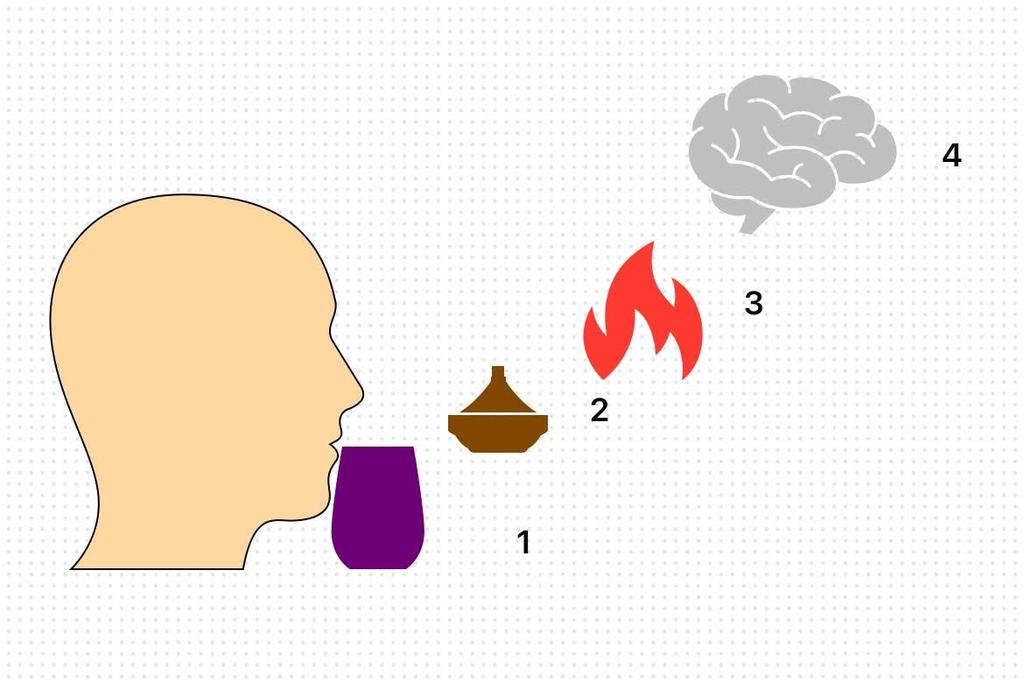
If you notice, the blessings follow a sequential order.
First we make a blessing on the wine which relates to ones mouth and sense of taste. The mouth is at the bottom of ones face, and, in order to derive benefit, the drink needs to actually touch the face.
Then comes the blessing on the spices which relates to ones nose and sense of smell. The nose is the next part up the face from the mouth. In order to derive benefit from the spices, one need only to be nearby the source of the smell in order to derive benefit.
Then comes the blessing on the fire, which relates to the eyes and sense of sight. The eyes are the next part up the face from the nose. In order to derive benefit from the sight of fire, one can even be a great distance away from the object.
The final blessing of Havdala is on the concept of separation, which relates to the mind and ones ability to discern and think. Pondering concepts is something that can be done anywhere, even if the object one is thinking about is not even remotely close to where the person is.
The sequence can be illustrated as so:
Through Havdala we demonstrate our desire to bring all of the kedusha we recieved throughout Shabbos into the upcoming week and try to use all of our faculties to remain separate from the lurings of the world and live, to the best of our abilities, in a way where we are separate from the trappings of Olam HaZeh, and stay above it.

(יב) וַיֹּ֤אמֶר לוֹ֙ יוֹסֵ֔ף זֶ֖ה פִּתְרֹנ֑וֹ שְׁלֹ֙שֶׁת֙ הַשָּׂ֣רִגִ֔ים שְׁלֹ֥שֶׁת יָמִ֖ים הֵֽם׃ (יג) בְּע֣וֹד ׀ שְׁלֹ֣שֶׁת יָמִ֗ים יִשָּׂ֤א פַרְעֹה֙ אֶת־רֹאשֶׁ֔ךָ וַהֲשִֽׁיבְךָ֖ עַל־כַּנֶּ֑ךָ וְנָתַתָּ֤ כוֹס־פַּרְעֹה֙ בְּיָד֔וֹ כַּמִּשְׁפָּט֙ הָֽרִאשׁ֔וֹן אֲשֶׁ֥ר הָיִ֖יתָ מַשְׁקֵֽהוּ׃ (יד) כִּ֧י אִם־זְכַרְתַּ֣נִי אִתְּךָ֗ כַּאֲשֶׁר֙ יִ֣יטַב לָ֔ךְ וְעָשִֽׂיתָ־נָּ֥א עִמָּדִ֖י חָ֑סֶד וְהִזְכַּרְתַּ֙נִי֙ אֶל־פַּרְעֹ֔ה וְהוֹצֵאתַ֖נִי מִן־הַבַּ֥יִת הַזֶּֽה׃
(12) Joseph said to him, “This is its interpretation: The three branches are three days. (13) In three days Pharaoh will pardon you*pardon you Lit. “lift up your head.” Cf. below at vv. 19, 20. and restore you to your post; you will place Pharaoh’s cup in his hand, as was your custom formerly when you were his cupbearer. (14) But think of me when all is well with you again, and do me the kindness of mentioning me to Pharaoh, so as to free me from this place.
The Midrash says that Yosef was punished severely for asking the butler to intercede on his behalf.
(ג) אַשְׁרֵי הַגֶּבֶר אֲשֶׁר שָׂם ה' מִבְטַחוֹ (תהלים מ, ה), זֶה יוֹסֵף. (תהלים מ, ה): וְלֹא פָנָה אֶל רְהָבִים, עַל יְדֵי שֶׁאָמַר לְשַׂר הַמַּשְׁקִים (בראשית מ, יד): זְכַרְתַּנִּי וְהִזְכַּרְתַּנִּי, נִתּוֹסַף לוֹ שְׁתֵּי שָׁנִים. אַשְׁרֵי הַגֶּבֶר אֲשֶׁר שָׂם ה' מִבְטַחוֹ,
(3) “Happy is the man who has made the Lord his trust” (Psalms 40:5) – this is Joseph. “And did not turn to the proud” (Psalms 40:5) – because he said to the chief butler: “Remember me…and mention me,” two years were added for him. “Happy is the man who makes the Lord his trust”
But the question many ask is that why was Yosef punished, wasn't this normal hishtadlus (human initiative) in order to secure his release?
Perhaps in the way we are explaining, Yosef should not have asked him three days in advance - he should have had faith that he would be released some other way before that time! Yosef thereby "clutched onto" this impetuous trait of Esav, his "middos-arch nemesis", and that is why he was punished so severely -one year of additional prison time for each of the three days he prematurely asked for the butler to ask for his release.

Yosef is also recorded to have been constantly connecting to Hashem through his mouth. When Yosef first came to Mitzrayim and worked for Potiphar, the passuk says:
(ג) וַיַּ֣רְא אֲדֹנָ֔יו כִּ֥י יְהֹוָ֖ה אִתּ֑וֹ וְכֹל֙ אֲשֶׁר־ה֣וּא עֹשֶׂ֔ה יְהֹוָ֖ה מַצְלִ֥יחַ בְּיָדֽוֹ׃
(3) And when his master saw that יהוה was with him and that יהוה lent success to everything he undertook,
(א) כי ה' אתו. שֵׁם שָׁמַיִם שָׁגוּר בְּפִיו:
(1) כי ה‘ אתו THAT THE LORD WAS WITH HIM — the name of God was a regularly in his mouth (Midrash Tanchuma, Vayeshev 8).
וַיַּרְא אֲדֹנָיו כִּי ה' אִתּוֹ וְגוֹ'. וְכִי פּוֹטִיפַר רָשָׁע הָיָה רוֹאֶה שֶׁהַקָּדוֹשׁ בָּרוּךְ הוּא עִמּוֹ, וּמַה הוּא כִּי ה' אִתּוֹ. אֶלָּא שֶׁלֹּא הָיָה שְׁמוֹ שֶׁל הַקָּדוֹשׁ בָּרוּךְ הוּא זָז מִפִּיו.
and his master saw that the Lord was with him (Gen. 39:2–3). How did the wicked Potiphar recognize, then, that the Holy One, blessed be He, was with him? In what way was the Lord with him? The name of the Holy One, blessed be He, never left Joseph’s lips.
By being scrupulous both in his eyes and mouth, Yosef merited to understand the 70* languages in order to rise in power before Pharaoh.
(The gematria of 70 is "ayin" which means "eye", and languages are something you speak with your mouth.
Because of Yosef's incredible control over his eyes and mouth, the way in which he merited to understand the 70 languages was by also "seeing" it, in other words, he grasped the culture and deep meaning of the words and cultural implications of the languages too.
On an even deeper level, by Yosef perfecting to use his mouth in the way Hashem intended, he connected to all of the languages as Hashem would, so there was simply no more language barrier.
It is only when a person has his "own" mouth disconnected to Hashem in some aspect, that another language is foreign to him, and since Yosef perfected his verbal service of Hashem, he was able to understand all of the languages.
(Not only was Yosef able to understand all of the "proper" languages, but there's grounds to say that he even understood "corrupted" versions of language too.
(ו) עֵד֤וּת ׀ בִּיה֘וֹסֵ֤ף שָׂמ֗וֹ בְּ֭צֵאתוֹ עַל־אֶ֣רֶץ מִצְרָ֑יִם שְׂפַ֖ת לֹא־יָדַ֣עְתִּי אֶשְׁמָֽע׃
(6) He imposed it as a decree upon Joseph when aOr “He went forth against.”he went forth from-a the land of Egypt; I heard a language that I knew not.
By the passuk using the term "sefas lo yadati", (instead of safah) it transforms the term "lo yadati" as an adjective of the word "sefas", resulting in the passuk saying that Yosef was able to understand an "unknown language," or a corrupted version of a language too.

Perhaps, Yosef's mastery over his eyes and mouth is alluded in the encounter between Yosef and Yaakov's at the end of Yaakov's life. The passuk says:
(א) וַיִּפֹּ֥ל יוֹסֵ֖ף עַל־פְּנֵ֣י אָבִ֑יו וַיֵּ֥בְךְּ עָלָ֖יו וַיִּשַּׁק־לֽוֹ׃
(1) Joseph flung himself upon his father’s face and wept over him and kissed him.
Weeping is an expression of the eyes and kissing is an expression of the lips, which both Yosef had perfected in his lifetime.
Another symbolism between Yosef and the power of the eye, perhaps we find in the very naming of Yosef. The passuk says:
(כג) וַתַּ֖הַר וַתֵּ֣לֶד בֵּ֑ן וַתֹּ֕אמֶר אָסַ֥ף אֱלֹהִ֖ים אֶת־חֶרְפָּתִֽי׃ (כד) וַתִּקְרָ֧א אֶת־שְׁמ֛וֹ יוֹסֵ֖ף לֵאמֹ֑ר יֹסֵ֧ף יְהֹוָ֛ה לִ֖י בֵּ֥ן אַחֵֽר׃
(23) She conceived and bore a son, and said, “God has gathered in ’(asaph, connected with “Joseph.”) my disgrace.” (24) So she named him Joseph, which is to say, “May יהוה add ( yoseph, connected with “Joseph.” ) another son for me.”
We see that the name Yosef connotes gathering in and also adding on.
The eye has both of these elements in particular. On one hand the eye is constantly absorbing and gathering in infromation. The word ayin, an eye, has the same root as ma'ayan, a spring, which some explain, is because just like a spring is constantly producing more and more water, so too the eye is constantly absorbing more and more information so long it is seeing. Rashi makes this observation in Bereishis:
(יב) חַכְלִילִ֥י עֵינַ֖יִם מִיָּ֑יִן
(12) His eyes are darker than wine...
(יב) יְטוּפוּן נַעֲווֹהִי בַּחֲמָר...
(12) His winepresses will be flowing with wine...
וְעוֹד תִּרְגְּמוֹ בְּפָנִים אֲחֵרִים, לְשׁוֹן מַעְיָנוֹת וְקִלּוּחַ הַיְקָבִים...
He (Onkelos) further translates the verse in a different way, taking עינים in the sense of fountains מַעְיָנוֹת and continuous flow of the wine-press...
Besides for the eye's function of constantly absorbing, the eye also has the abilty to exert influence on other things. For example, we find the idea of "nasan ba einav...", "he placed his eyes on him..." throughout Shas:
כִּי אֲתָא מַלְכָּא, פָּתַח רַב שֵׁשֶׁת וְקָא מְבָרֵךְ לֵיהּ. אֲמַר לֵיהּ הָהוּא מִינָא: לְמַאן דְּלָא חָזֵית לֵיהּ קָא מְבָרְכַתְּ? וּמַאי הֲוִי עֲלֵיהּ דְּהָהוּא מִינָא? אִיכָּא דְּאָמְרִי: חַבְרוֹהִי כַּחְלִינְהוּ לְעֵינֵיהּ, וְאִיכָּא דְּאָמְרִי: רַב שֵׁשֶׁת נָתַן עֵינָיו בּוֹ, וְנַעֲשָׂה גַּל שֶׁל עֲצָמוֹת.
When the king came, Rav Sheshet began to bless him. The heretic mockingly said to him: Do you bless someone you do not see? The Gemara asks: And what ultimately happened to this heretic? Some say that his friends gouged out his eyes, and some say that Rav Sheshet fixed his eyes upon him, and the heretic became a pile of bones.

Although perfecting our mouths and eyes to the degree that language barriers melt away is extremely lofty, the overall concept of perfecting ones mouth and eyes whereby a strong connection to Hashem "naturally" evolves, takes form in another application as well, which we can try to apply to our own lives.
(טו) וַיִּקַּ֛ח יְהֹוָ֥ה אֱלֹהִ֖ים אֶת־הָֽאָדָ֑ם וַיַּנִּחֵ֣הוּ בְגַן־עֵ֔דֶן לְעׇבְדָ֖הּ וּלְשׇׁמְרָֽהּ׃
(15) God יהוה settled the Human in the garden of Eden, to work it and guard it.
The beginning letters of the words לְעׇבְדָ֖הּ וּלְשׇׁמְרָֽהּ (to work it and guard it) are "ayin" and "peh", eye and mouth.
Although this passuk is discussing Adam HaRishon's command in the Garden of Eden to work the land, the allusion to the eye and the mouth comes to teach, that when we use our mouths and eyes properly in the service of Hashem, we can experience the joy and bliss of Gan Eden right now, even while we are in this world!
We tend to associate Gan Eden and Olam Haba to being rewards that are in the distant future which we have no connection to while we are still here on Earth. But this is incorrect, we are able to connect to eternal bliss even in this world.
In fact, let's take a closer look at the word "Olam Haba." Most people translate it as "The World to Come", and insert the implication that we are going to go there in the Afterlife.
But grammatically, "Olam Haba" means "The world that is coming" - to us. This is further proof that one can bring an Olam Haba experience to this world, and taste the ecstasy of closeness to Hashem even here on Earth.
Interestingly, the name of the notorious Esav, is made up of the letters "ayin vav shin", which translates as "eye and mouth."
Esav, the Seforim say, was born with tremendous potential for closeness to Hashem, particularly, it seems, in his eyes and mouth, but unfortunately squandered it and used it for evil.
However, Yitzchak Avinu, knew Esav's latent potential and saw to keep his hopes up to invest in him to reach his potential. When Yaakov came to steal the beracha from Esav, the passuk says:
(כז) וַיִּגַּשׁ֙ וַיִּשַּׁק־ל֔וֹ וַיָּ֛רַח אֶת־רֵ֥יחַ בְּגָדָ֖יו וַֽיְבָרְכֵ֑הוּ וַיֹּ֗אמֶר רְאֵה֙ רֵ֣יחַ בְּנִ֔י כְּרֵ֣יחַ שָׂדֶ֔ה אֲשֶׁ֥ר בֵּרְכ֖וֹ יְהֹוָֽה׃
(27) And he went up and kissed him and he smelled his clothes and he blessed him, saying, “Ah, the smell of my son is like the smell of the fields that יהוה has blessed.
(א) וירח וגו'. וַהֲלֹא אֵין רֵיחַ רַע יוֹתֵר מִשֶּׁטֶף הָעִזִּים? אֶלָּא מְלַמֵּד שֶׁנִּכְנְסָה עִמּוֹ רֵיחַ גַּן עֵדֶן;
(1) ’וירח וגו AND HE SMELLED etc.— Surely there is no more offensive smell than that of washed goat-skins! Rather, the perfume of the Garden of Eden entered the room with him (Genesis Rabbah 65:22).
Perhaps, Yitzchak perceieved that Esav had so greatly perfected his eyes and mouth, that he reached fulfilled a high level of "l'avda u'lshamra" of Gand Eden, (which as we explained above, also refer to the work of the eye and the mouth) , and that is why the perfume of Gan Eden entered with him.
In preparing Mitzrayim for the impending famine, Yosef made the Egyptian kingdom very wealthy. However, Chazal say that the Egyptians did a curious thing with that money.
(ג) "וישובו ויחנו לפני פי החירות."
כאן נתקיים "ואחרי כן יצאו ברכוש גדול."
אמר הקב"ה, "זו היא הבטחה שהבטחתי לו יחזרו לאחוריהם. שכל כסף וזהב שכנס יוסף היה נתון בבעל צפון וכשחזרו נטלוהו,
שנאמר כנפי יונה נחפה בכסף.
[When Klal Yisrael were leaving Mitzrayim, the passuk says:] "And they returned and camped in front of Pi HaChiros." (Shemos 14,2)
It was here that the promise to Avraham that "they shall leave with great spoils" (Bereishis 15,14) was fulfilled.
Hashed said, "Klal Yisrael would 'return' [towards Egypt] in order to collect the spoils, because all of the gold and silver that Yosef collected was hidden in the Avoda Zara of Baal Tzefon, and when Klal Yisrael was leaving Egypt, they took it.
This is alluded to in the passuk that says "the wings of a dove sheathed in silver." (Tehillim 68,14)
We see here too, that, like your namesake, Yosef and Yonah (the dove) are related.
Let's try to find a deeper understanding of the connection that the Medrash is making here between Yosef's spoils and the dove.
The Medrash is very exacting in its words, and the Medrash is specifying that they hid the "gold and silver" that Yosef collected. The word for silver is "כסף" (kesef) which shares the root for the word "כיסופין" (kissufin) which means "longing for connection".
And the word for gold is זהב (zahav) which can be broken into two words זה הב (zeh hav), "this one is constantly giving."
Thus, the depth of the Medrash is, that all the while that Klal Yisrael was enslaved in Mitzrayim, they weren't able to hold on to the strengths and attributes of Yosef in his Avodas Hashem, and instead they were in the idol of "Baal Tzefon".
The word "Tzefon" comes from the word "tzafun", hidden, alluding to the idea that these attributes of Yosef, both in his connection with Hashem (as alluded to in silver/kissufin) and in his generosity to his fellow person (as alluded to in gold/zeh hav), were hidden away in beneath their minds.
When Klal Yisrael became freed from slavery and their hearts and minds opened to Avodas Hashem, they were able to extract those attributes from Baal Tzefon and tap into those extraordinary middos.*
The symbolism of the silver and gold relating to yearning towards Hashem and giving to others, respectively, has another layer of depth, which connects to a topic mentioned earlier.
Although gold more valuable than silver, silver comes first. This symbolizes, that before one goes about doing chesed for others, he needs to first establish it to be within the framework of service of Hashem and within those guidelines, or else, as we mentioned, unbridled kindness can result in awful things.
However, gold is more valuable than silver, and this symbolizes that inspiring and giving to others is a higher form of service to Hashem than investing in ones own personal relationship with Him.
(But, the idea goes full circle, because one cannot begin to be a "giver" without having a solid relationship to Hashem and Torah)
We see this idea of being a giver being on a higher level in the passuk in Kedoshim.
(יח)...וְאָֽהַבְתָּ֥ לְרֵעֲךָ֖ כָּמ֑וֹךָ אֲנִ֖י יְהֹוָֽה׃
(18) ...Love your fellow [Israelite] as yourself: I am יהוה.
We mention our relationship to our fellow man before Hashem!
*I asked R' Shimon, that on the Yam Suf, the angels were still unable to distinguish between the Jews and the Egyptians, claiming "these are idolators and these are idolators" which would seem like they were on a very low madreiga at that point, not like we are saying here, that they just recaptured the lofty ideals of Yosef HaTzaddik?

Now, when one binds himself to good middos and finds his true self in the service of Hashem, he is essentially binding himself with his neshama which is one's celestial "spouse," and this relationship is one that can never terminate.
We find that a dove's relationship with its spouse shares this similarity, in that once a dove finds its spouse, even if it dies, the dove will not mate with another dove, as its loyalty will always be to its first spouse*, because its first spouse will always live in its heart.
(טו) הִנָּ֤ךְ יָפָה֙ רַעְיָתִ֔י הִנָּ֥ךְ יָפָ֖ה עֵינַ֥יִךְ יוֹנִֽים׃
(15) Ah, you are fair, my darling, Ah, you are fair, With your dove-like eyes!
מַה יּוֹנָה זוֹ מִשָּׁעָה שֶׁמַּכֶּרֶת בֶּן זוּגָהּ, עוֹד אֵינָהּ מְמִירָה אוֹתוֹ בְּאַחֵר, כָּךְ יִשְׂרָאֵל מִשָּׁעָה שֶׁהִכִּירוּ לְהַקָּדוֹשׁ בָּרוּךְ הוּא, לֹא הֱמִירוּהוּ בְּאַחֵר.
Just as the dove, from the moment it becomes familiar with its mate, it does not exchange it for another, so too Israel, from the moment that they became familiar with the Holy One blessed be He, they did not exchange Him for another.
This is also a lesson into the fabric of the nation of Klal Yisrael. No matter we may find ourselves in life, there is never a separation from Hashem.
Even when a Jew seems to disconnect himself from Hashem, it is never indicitive of a complete separation from Hashem; a Jew, like a dove, is always connected to Hashem, no matter how far they may find themselves.
*The dove exhibits "loyalty" to its owners as well. For this reason, doves used to be "courriers" to deliver messages back and forth between poeple in the olden days, as they would be trusted to bring the cargo back to their owners. Radak makes this point:
ובראות נח כי לא למד מהעורב דבר שלח את היונה כי היונה יש בה כח הדמיון להשיב שולחה דבר אחר שמוליכין אותה באותה הדרך פעם או שתים, גם יש בה טבע תשובה, לשוב אל קנה, וכן מנהג המלכים לגדלה בביתם ולשלחה במקומות הרחוקים וקושרין כתב בכנפיה והיא שבה אל שולחה בכתב התשובה שקושר אותה בכנפיה גם מי שנשתלחה להם...
Seeing that this mission of the raven had proved totally unproductive, after waiting seven days, Noach sent out a pigeon. A pigeon is known to have a well developed sense of imagination and direction, finding its way back after having flown over a route only once or twice. It knows that it was dispatched for a purpose, i.e. to receive some information in return for having been dispatched [we know of carrier pigeons in our time, but if there had been such already in the days of Noach is highly speculative. Ed.] Moreover, it is in the character of pigeons to be attached to their home base, so that they can be depended on to return to their nest. When we have been told in Shabbat 49 that the wings of the pigeon protect it, the meaning is that seeing that the pigeons are being raised as carrier pigeons, transporting messages attached to its wings,

My blessing to you, my beloved brother, Reb Yonah, is that you continue to grow in your service of Hashem, in your connection with Hashem, your davening and learning, and in your positive eye and beautiful middos - it is a breath of fresh air and a joy to the souls of everyone around you!
May you also continue to sing your favorite song - 🎵Naaaar Hayisi🎶, whose lyrics also allude to your name:
(כה) נַ֤עַר ׀ הָיִ֗יתִי גַּם־זָ֫קַ֥נְתִּי וְֽלֹא־רָ֭אִיתִי צַדִּ֣יק נֶעֱזָ֑ב וְ֝זַרְע֗וֹ מְבַקֶּשׁ־לָֽחֶם׃
(25) I have been young and am now old,but I have never seen a righteous man abandoned,or his children seeking bread.
The numerical value (gematria) of each of the first letters of each word of the song add up to the same gematria as יונה - "Yonah!"
The concept of tallying up the roshei teivos (the beginning letters of the words) and making a Gematria out of those letters is found in early sources, see Siddur Otzar HaTefillos beginning of Kabbalas Shabbos.
May you continue to see nachas and joy from your family and keep soaring higher and higher in you Avodas Hashem, and may we all see Hashem's return to Tzion and the final redemption of Klal Israel.
Amen!
With love,
Rav Shimon Grady and the entire Keser Torah family